In a Small Boat /  by Michael Winters

by Holly Graham

Fondly I remember

the process of finishing special puzzles as a child. My mother would oh so gently turn them over and tape them. Then we would frame them for my room. This didn't happen to all puzzles, only ones that, to us, were true art that we wanted to see always. The act of building the puzzle was rewarding but the real reward was being able to see it every day on the wall.  

This happened a handful of times. All were puzzles created from the work of a single artist: James Christensen. To an anxious but creative child, Christensen's paintings provided a wealth of visual treasures. Each image featured an abundance of detail and imagination. For others, it may have been easy to glance at these images and move on. Not for me. I spent a lot of time peeking into a world that I knew nothing about. I was a spectator in a land not my own. These fantastical  places and characters, the shapes their faces made, the lines their fingers created, became familiar, comforting.  

"Fantasies of the Sea" by James Christensen

"Fantasies of the Sea" by James Christensen

Detail of "Once Upon a Time" by James Christensen

Detail of "Once Upon a Time" by James Christensen

Fondly I remember  

seeing my children's faces for the first time. The road to starting a family had not been an easy  one. Seeing their faces for the first time I was certain miracles were not taken captive by the Old and New Testaments, but could still blaze into our everyday lives.  

I became a stay-at-home mom, something I am sure there must be a better name for, as we do not stay at home, and there are surely far more dignified ways we can describe that role. As they grew we decided homeschooling would be the best for them. So the sinew that formed between my children and I became stronger and stronger. Merriam-Webster suggests sinew is “the tissue that ties muscle to bone... a stabilizing unit.” That's exactly what had taken shape.  

Fondly I remember  

my grandmother sleeping beside me as I lay in her bed as a child. Her and my grandaddy would  watch me sometimes. My grandaddy would sleep on the couch and I would sleep in their bed. After I had been asleep for a while I would hear her little feet shuffle in and she would lay gently  beside me. And I felt peace.  

After 67 years of marriage, precious Grandaddy went to glory. His fight with pancreatic cancer  was more than his body could endure. Near the end I called Grandma on the phone, across the  states that divided us, every day, to hear how he was. When he left us, I continued to pick up that phone. Each and every day I got to hear her voice. Each and every day I got to learn more about her. Her past, her present, her opinions, her friendships, her stories, her... everything.  

Dementia. Like many things that are a product of a broken world, it is hard to understand why it  has to be a reality. But it hit my grandmother and it hit her hard. For her protection and for her to have the best care, she had to be moved to a wonderful care facility designed just for memory loss. In the transition, I simply could not talk to her on the phone as regularly as I liked. My heart ached. I wanted to be with her. I wanted to know how she was feeling. I wanted to know how the world seemed to her, how she felt about all this. I longed to hear what her birds and squirrels had done that day. I longed to hear how her favorite baseball team had done on that day's game. I just... longed.  

Anxiety is a dark spirit that has plagued me since a young age. I was taken to the doctor for tests  at age eight because I was having physical issues. My diagnosis was a manifestation of complications of stress. The doctor asked “why is an eight year old so stressed?” Throughout  life, it would find ways to insert itself. When I was sixteen driving meant freedom, but later in life, anxiety had wrapped its fingers around that as well. Driving alone long distances or to  somewhere I had never been had become something so fearful it was debilitating. I also did not  like driving in heavy rain which left me feeling claustrophobic. Anxiety also wove its web in the thought of leaving my children. The sinew mentioned before was well-formed and I was just as dependent upon them as they were upon me. It had been so hard to have them, I never wanted to be separated from them.  

But then there was the longing. The longing to just be in the same room as my dear friend and  grandmother. Which was met with anxiety's response: “You would have to leave your children. You can't be without them. You would have to drive a very long distance. Alone. It's impossible.”  

And then I decided I had missed enough in life at the hands of anxiety. Events and opportunities  I can never get back and often regretted. I had to break this cycle.  

The first sight my eyes saw as I left the driveway was my children in the glass door waving goodbye. I started shaking, feeling like I couldn't breathe. I just started saying “Jesus, Jesus,  Jesus.” I traveled down the road and as I turned to get on the interstate, a tall dark ominous cloudy sky met me. Like a bully the enemy was pulling out every tried and true tool to get me to fail. I said “Jesus help me!” He said to me “Your comfort is not in your family. Your comfort is  not in your circumstances. Your comfort is in Me.” The rain began to pour. It was thick, I couldn't see in front of me, and it stayed for my whole trip. My enemy was all around me, trying to suffocate me. But in my car, I petitioned for God to stay near and He, as always, was faithful.  

I emerged from the experience victorious. It was the sweetest kind of victory—the kind that we cannot create ourselves but the kind that is handed to us by a gracious and merciful Savior. A  Savior who sees our weight that we carry and says “let me exchange that for lightness of spirit.” 

I had been marked from this experience. As a visual thinker I wanted an image to represent this  triumph, this death of captivity, and He brought it right to mind. It had been present in my room as a child. I had studied it at great length. Frantically I tried to find it to see if it would apply.  Surely as He is good, it was perfect.  

"Afternoon Outing in a Small Boat with Owl" by James Christensen

"Afternoon Outing in a Small Boat with Owl" by James Christensen

A girl, with love on her sleeve, traveling downstream. The water and wood surrounding her are dark. Her umbrella is up. She feels like a fish out of water, but there is One right there beside her who represents wisdom. Honestly He is bigger than the vessel allows, but He has made himself fit in order to be with her. I understood that at the helm was wine and a snail. But I liked to think of it as communion. Right in her view as she travels is a reminder of the blood and the body that  had been given on her behalf, so that fear couldn't touch her.  

I had this tattooed to my leg. Then a year or so later, I found a button in an old bag of mine that  my husband must've made for me years ago that I hadn't remembered. It featured the exact same  painting. It was like God, my Creator and Friend, was saying, “Hey, remember our road trip?” I  set it up in my office as an altar to the idea that no giant can stand up to His power. They can threaten but they cannot sustain the might of a Father who's child has called out for help. 


Holly Graham profile photo.jpg

Holly Graham is a Virginia native who earned a BFA from Longwood University. She has held professional appointments in the photographic, curatorial, and art management fields. Four books have been published featuring Holly’s illustrations and one book featuring her “New Life Doll Project” photographic series. Holly is a multidisciplinary exhibiting artist, creating work with a goal of bringing joy, comfort and/or encouragement to others. She currently lives in Kentucky with her husband and two children, whom she homeschools while making art.

You can view her work by visiting hollymgraham.com.


This post is part of an ongoing series where we ask artists and arts professionals to share artwork that has significantly impacted their formation as a Christian. 

No Grumpy Rose Watchers /  by Michael Winters

by Michael Winters

Garden of the Garden #001 by Michael Winters

Garden of the Garden #001 by Michael Winters

“It’s very hard to be grumpy when you’re looking at a beautiful rose—try it. It’s turning to what is good that fills out the life of the emotionally and spiritually mature person. As you step into spiritual maturity, you step into the wonderful world of God so rich with good things that we won’t have enough time to concentrate on them.” - Dallas Willard in Renovated: God, Dallas Willard, and the Church That Transforms by Jim Wilder

At Arts Feedback Group we generally begin each session by going around the circle answering the question, “What is something beautiful you’ve experienced recently?” This question is a joy to ask because it brings forth joy. People light up as they share the beauty they’ve experienced.

We become like what we behold.

While we pay attention to a rose, we become a little more like a rose. Grumpiness becomes less possible. If we lovingly pay attention to Jesus, we become more like Jesus. In a world competing and scheming for our attention we must learn to exercise authority over our own attention. Don’t let algorithms and the media giants (or the Christian publishing industry for that matter) decide for you what is worthy of your attention. God has made you sensitive to beauty, truth and goodness. The apostle Paul encouraged the Philippians, “Whatever is true, whatever is honorable, whatever is right, whatever is pure, whatever is lovely, whatever is of good repute, if there is any excellence and if anything worthy of praise, dwell on these things.” Dallas Willard adds, “That’s what the spiritually and emotionally mature person’s life is filled with.”

This is not to deny or ignore the reality of injustice, tragedy and sin. Instead, attentiveness to the beauty of God and God’s creation helps prepare us to be the kind of spiritually mature people who can enter the real, broken world and create into what Makoto Fujimura calls “the New”, healing some of the fractures in our broken world.

What is something beautiful you’ve experienced recently?

Discussion Guide: Art + Faith by Makoto Fujimura /  by Michael Winters

81ui1cxO+EL.jpeg

SYNOPSIS (from the publisher)

From a world-renowned painter, an exploration of creativity’s quintessential—and often overlooked—role in the spiritual life

"Makoto Fujimura is the rare artist whose life has something of the same purifying and galvanizing force of his work. His new book brings those two elements—life and art—even closer together, and is a real tonic for our atomized time." —Christian Wiman

Conceived over thirty years of painting and creating in his studio, this book is Makoto Fujimura’s broad and deep exploration of creativity and the spiritual aspects of “making.” What he does in the studio is theological work as much as it is aesthetic work. In between pouring precious, pulverized minerals onto handmade paper to create the prismatic, refractive surfaces of his art, he comes into the quiet space in the studio, in a discipline of awareness, waiting, prayer, and praise.

Ranging from the Bible to T. S. Eliot, and from Mark Rothko to Japanese Kintsugi technique, he shows how unless we are making something, we cannot know the depth of God’s being and God’s grace permeating our lives. This poignant and beautiful book offers the perspective of, in Christian Wiman’s words, “an accidental theologian,” one who comes to spiritual questions always through the prism of art.

QUESTIONS FOR DISCUSSION

  • What made you want to read this book? Did you appreciate it?

  • Theology of Making - In this book, Mako develops a “Theology of Making.” This is grounded in God’s creation. He writes on p. 18, “So why did God create? Our view of the creative process and the role of art hinges on how we answer this question. God created out of love. God created because it is in God’s nature to make and create. The Theology of Making assumes that God created out of abundance and exuberance, and the universe (and we) exist because God loves to create.”

    Does this change the way you think and feel about your own creative work?

  • Fruit of the Spirit - Mako puts emphasis on the “fruit” of our beliefs. What we make is the evidence of what we believe. “Unless there is tangible, fruitful reality that is made into the world, what we know, and what we preach, has not incarnated itself fully in love. No matter how high the ideal, or how great the preaching, the true test of the power of the gospel to affect our lives is in the “bottom line” of what we have created into the world through love.” (62)

    Where does that take your imagination?

  • Plumbing Theology - The book critiques what Mako names “plumbing theology.” What is plumbing theology and can you summarize what he proposes as a better alternative?

  • Spaces for Sanctified Imagination - “We need every practitioner, curator, and cultural institution to create a safe place for artists to experiment and grow in this sanctified imagination. This can start within churches, but I advocate for a general cultural practice that also works outside of church walls.” (48)

    What ideas do you have for creating these kinds of spaces for artists to grow in sanctified imagination?

  • Co-Creation - “By asking Adam to name the animals, God commissions him to use his creativity. In this word “commission” we find co-mission, as well; God is inviting Adam to exercise his ability to co-create in Eden.” (96)

    Can you see yourself as a co-creator with God in the way Mako describes?

  • Mary, Martha, Lazarus, and Christ’s Tears - The book spends a lot of time reflecting on Jesus’ relationship with Mary, Martha and Lazarus. What stood out to you from those reflections?

  • Engaging Art- Mako says in the work of Rothko and T.S. Eliot: “I am finding a “holy ground” that allows me to journey into my faith, my doubts, and my awareness of suffering.” (125) It’s insightful to see how he engages other artists’ work. Does this provide any inspiration for how you want to engage artist’s work?

  • Moving Outward - “The New reverses the spin; instead of being drawn to the Temple, to the mercy seat, to worship, we are sent out into the world to share the feast with outsiders, migrants, and the poor. Instead of the songs of ascent as we climb toward Jerusalem, we will carry the tears of Christ and sing songs of descent beyond the sea.” (139)
    What ways do you want to move out into the world by making?

  • Consider ending discussion the way the book ends, by reading A BENEDICTION FOR MAKERS: 

“Let us remember that we are sons and daughters of God, the only true Artist of the Kingdom of abundance. We are God’s heirs, princesses and princes of this infinite land beyond the sea, where heaven will kiss the earth. May we steward well what the Creator King has given us, and accept God’s invitation to sanctify our imagination and creativity, even as we labor hard on this side of eternity. May our art, what we make, be multiplied into the New Creation. May our poems, music, and dance be acceptable offerings for the cosmic wedding to come. May our sandcastles, created in faith, be turned into permanent grand mansions in which we will celebrate the great banquet of the table. Let us come and eat and drink at the supper of the Lamb now so that we might be empowered by this meal to go into the world to create and to make, and return to share what we have learned on this journey toward the New.”

Arvo Pärt’s Fratres /  by Michael Winters

by Brittany Anne Jarboe Jennings

A tall elderly man walks through a wooden glen. He smiles often, having a child like joy for the things around him. He stops often, meandering. Active in his slowness. Still in his activity. He listens often. He is listening to the silence in between nature’s composition. This elderly man is Estonian musical composer Arvo Pärt. To him: “Silence is always more perfect than music. You must simply learn to hear it. Silence is utterly full. The fewer the measures, the more genuine the whole—spiritual abundance in the desert. Where the holy men fled.”

Please listen to this recording of “Fratres” by Arvo Pärt before or during reading. It will help what I write make sense.

It was around 2006 when an uncle introduced to me Arvo Pärt’s music. I was at a state university studying cello performance and visual art. I had hit a bit of a wall mentally. Studying classical music felt forced. I was disillusioned with the current American Christian music scene. I was questioning if someone in our present time could be a true artist and a true Christian. I wanted discipleship in this. Looking to past artists, when the Catholic Church was a patron, seemed lifeless. I craved a more intimate view of God, a wider view of His saving grace, and a bigger scope of what an artistic Christian life could be.

My uncle, who is an artist and a Christian, probably gave me the CD of Arvo Pärt’s Fratres during one of our many art chats at his house near campus. After I listened, I knew Mr. Pärt was who I had been searching for. I was searching for music that rang true to my experience as a child of God. I say to my experience because each believers’ journey is uniquely intimate with our everlasting God. I had been in church praise bands for around five years by that point. I had grown up in a Christian and artistic environment. I played church music since childhood and knew the way some older hymns felt true. Experiencing church music from different cultures felt real. However, I was increasingly numb to the four chord, jumping up and down, praise music that currently surrounded me. Not to say this style of music doesn’t have a place; at that past juncture I was searching and it just wasn’t helping.

Arvo Pärt’s music and writings gave me a renewed sense of awe at our Creator God. This someone, who comes across as a wise, gentle giant, had his own rebellious and experimental streak that caused the birth of a new musical movement; an exile from the Soviet Union, who once accidentally set a violin on fire on stage. His rebellion and innovation was rooted in his Christian faith, more specifically the Orthodox Church and early medieval church music. 

So I decided to try and play his music.

Art by Brittany Anne Jarboe Jennings

Illustration of Arvo Pärt by Brittany Anne Jarboe Jennings

I have only played two out of his vast amount of pieces. Spiegel im Spiegel and Fratres, both originally written for violin and piano, then later rewritten for cello and piano. There is a great BBC Soul Music podcast episode about his Spiegel im Spiegel; I encourage you to listen to the episode, as I will not talk about that one and am going to write briefly about his Fratres. No heavy musical language. No music theory. There are ingenious theoretical reasons why Arvo Pärt is one of the most performed living composers of today. There are reasons why his works embody the sound of transcendence. I am not going to write about those because I do not fully understand them and there are great articles and books already on the subject. 

Remember the solitary woods in which we found the elderly man? Please imagine it again. If you haven’t listened to the piece yet, now would be a good time.

This was my experience with Fratres: Playing the opening segment is like sprinting. I am sprinting into this wood trying to catch up with Arvo Pärt. The cello is sounding the afternoon light filtering in narrow bands of warmth through statuesque trees. The light kaleidoscopes as I run past. But I never catch him. As soon as I reach the clearing where he rests, he is gone. I listen to the lonely chords on the piano and pizzicato of my cello. Alone. The whole piece for me is a search. Running followed by the stillness of opening my eyes to all that surrounds me in this afternoon wood. I search through each movement. A slow searching of the clearing’s edges. The lonely piano chords and cello pizzicato, I see him again. I slowly walk towards him. Then disappears. I step in water. Music is good for portraying running water. I search around the stream. It is so freezing my breath is stolen. Partial glimpses of the creator obscured by shadows which move on the opposite bank. Alone again. Then I run. Careful searching followed by running.

For me, playing Fratres is constantly searching for this creator of Light’s sound, while never being in step with him. At least not until the end. Once silence has wrapped the performers and audience in awe, then we all have caught up with the composer. The silence that had flowed in between the running and searching has led us to a final peace. After the music stops, we bask with Pärt in the warmth of the light which now lives in memory. We are all smiling.

image2.jpeg

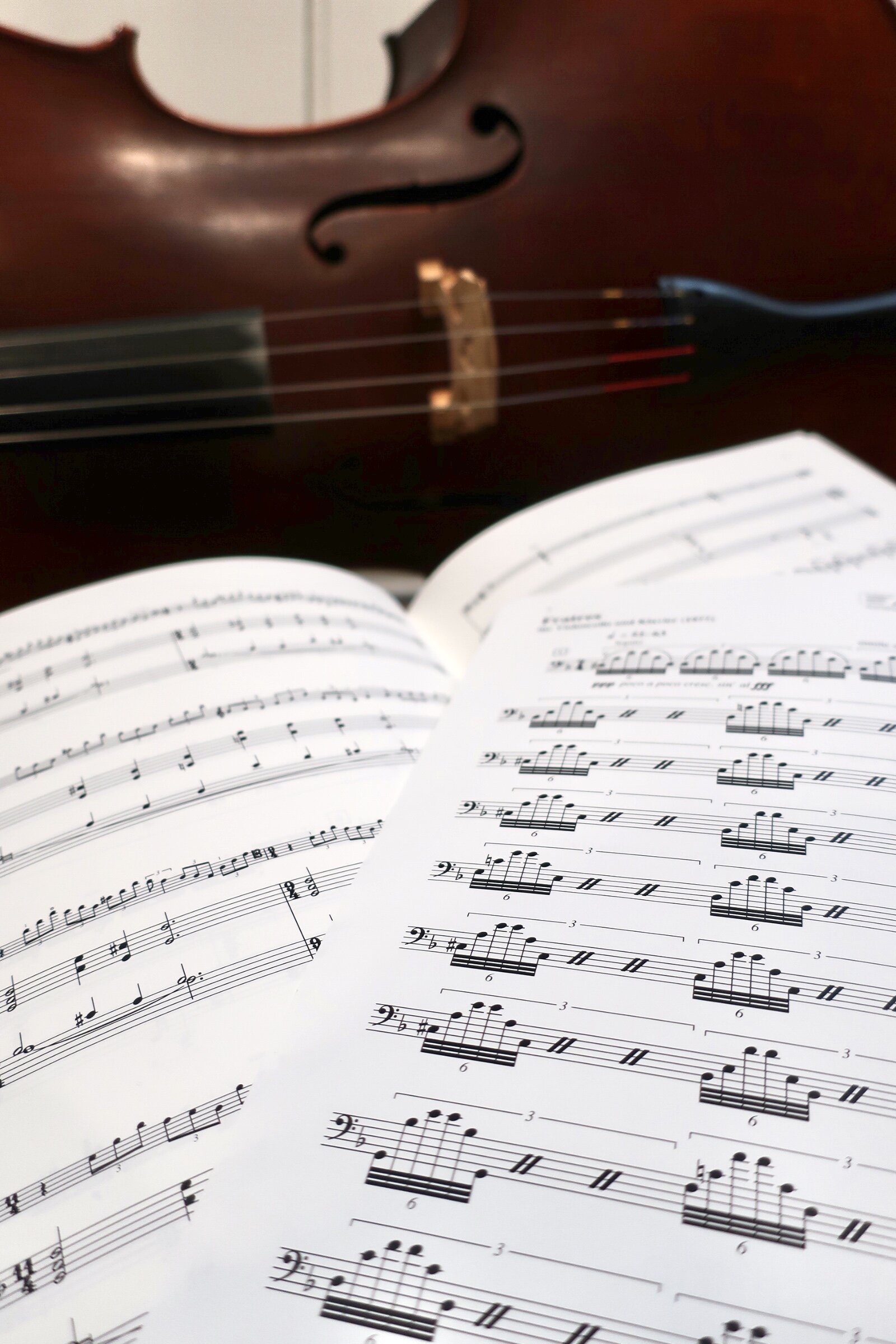
Fratres sheet music and Brittany’s cello.

No recording exists of me playing this piece. I graduated before I remembered to ask for a copy, and I even lost the sheet music in a move. I have recently bought the music, but cannot reach the point where I can proficiently play it. When I hear professional recordings I can imagine playing it again. It’s probably for the best I don’t actually remember how I sounded. Only the memory of the experience is left. Maybe that is all I need.  

God has used Arvo Pärt’s demeanor about art to open my eyes to the quiet joy of God. To quiet myself and know that though God is far mightier and more awe inspiring than all human minds throughout history can collectively imagine, He is also gentle. He is a lover. He delights in creating. That He loves His creations. That He is a still small voice in whirlwinds. A contented smile. Content to smile at me and my smallness. 

A funny thing for musicians is that silence and rests are the hardest to get right. Running is easy. Waiting is not. The space between the notes is equally important. Utmost patience is needed to play this music correctly. Just being with the music is needed to understand it. Presence. Continual presence. Pärt’s music contains the breath of human suffering, sorrow, bliss, and satisfaction. It also reminds me of how our God is empathic to us. Our Triune God knows the range of human thought and emotions. Jesus lived this. To me, Arvo Pärt uses music to emote the human condition. But through the silences, Arvo Pärt emotes the presence of Divine empathy. 


image3.jpeg

Brittany Anne is a visual artist and cellist in Louisville, KY. She has shown in various shows around the Ohio River Valley since 2009. Currently she is working on a series of meditative graphite drawings focusing on how the passage of time shows in our changing natural environments. Find updates on Instagram @brittandthecello.

For further information on Arvo Pärt, visit Arvo Pärt Centre.

This post is part of an ongoing series where we ask artists and arts professionals to share a piece of artwork that has significantly impacted their formation as a Christian.

Like a Bell /  by Michael Winters

by Michael Winters

Kris Martin, Bells II, 2014, bronze, 160 x 320 cm Installation view Sculpture In The City, London Photo Nick Turpin

Kris Martin, Bells II, 2014, bronze, 160 x 320 cm
Installation view Sculpture In The City, London Photo Nick Turpin

At the moment, I can’t think of a visual artwork more tragic than Kris Martin’s Bells II. Two monumental bells are joined in such a way that neither can fulfill its purpose. Like much good art, this metaphor is a sign pointing to a wide range of potential meanings. Among other things, it could definitely serve to symbolize all the bells that have not been rung during covid—concerts and plays and exhibits and worship services that have not happened, or at least not happened with their full freedom ringing. However, the image isn’t only about bells that can’t ring. It’s about the joining of two bells, a terrible co-dependency that keeps each bell from ringing. And what is a bell if it does not ring?

It’s like Judas joined to his greed, or like Peter joined to his fear and denial.

In the marvelous book Pilgrim at Tinker Creek, Annie Dillard experiences an episode not unlike Moses at the burning bush. To describe the inner experience of that external vision, Dillard writes, “I had been my whole life a bell, and never knew it until at that moment I was lifted and struck.”

It makes me wonder if God has made us all bells. Sin has kept us from ringing—by co-dependencies, or ignorance, or wounds like cracks in the liberty bell—but in our joining with Jesus, as he is lifted, we are lifted and ring true.

The resurrection of Christ makes me hopeful that we’ll all be lifted and we’ll all ring true and clear, like Mary Magdalene when she recognizes the risen Jesus and hears his voice. Ronald Rolheiser retells the story from John 20 in his book Sacred Fire. Picking up where Mary is outside the tomb weeping:

“Jesus meets her, alive and in no need of embalming, but she does not recognize him. Bewildered but sincere, she asks Jesus where she might find Jesus. Jesus, for his part, repeats for her essentially the question with which he had opened the gospel: ‘What are you looking for?’ Then he answers it: With deep affection, he pronounces her name: ‘Mary.’ In doing that, he tells her what she and everyone else is forever looking for—God’s voice, one-to-one, speaking unconditional love, gently saying your name. In the end, that is what we are all looking for and most need.”

Hearing Jesus’ voice saying our name is what will lift us up and make us sing like a bell.

Jack by Marilynne Robinson: A Faith in Fiction Discussion Guide /  by Michael Winters

SYNOPSIS (via the publisher)

IMG_5917.jpg

Marilynne Robinson, winner of the Pulitzer Prize and the National Humanities Medal, returns to the world of Gilead with Jack, the latest novel in one of the great works of contemporary American fiction.

Marilynne Robinson’s mythical world of Gilead, Iowa—the setting of her novels Gilead, Home, and Lila, and now Jack—and its beloved characters have illuminated and interrogated the complexities of American history, the power of our emotions, and the wonders of a sacred world. Jack is Robinson’s fourth novel in this now-classic series. In it, Robinson tells the story of John Ames Boughton, the prodigal son of Gilead’s Presbyterian minister, and his romance with Della Miles, a high school teacher who is also the child of a preacher. Their deeply felt, tormented, star-crossed interracial romance resonates with all the paradoxes of American life, then and now.

Robinson’s Gilead novels, which have won one Pulitzer Prize and two National Book Critics Circle Awards, are a vital contribution to contemporary American literature and a revelation of our national character and humanity.

PERSONAL REFLECTION by Michael Winters

John Ames Boughton, aka Jack, is a different character than his namesake John Ames, the main character of Robinson’s Gilead. And as Jack is a different kind of character, the book is a different kind of book. Not as soaring and transcendent as Gilead or Lila, Jack still captured my attention with its characters’ complexities and philosophical dialogue. Some in our discussion group found the book a little slow moving, but the slower pace rewards with deep insights around human nature and Robinson’s returning themes around grace and religious belief. I thought this book a great fit for our Faith in Fiction discussion group. We especially enjoyed talking about the references and parallels to stories found in Genesis.

QUESTIONS FOR DISCUSSION

  1. The first quarter of the book follows a long conversation between Jack and Della when they surprisingly find themselves locked in a cemetery together at night. As the long night is ending, Jack wonders, “What would be the one sufficient thing to say, before the flood of light swept over them, now that their world was ending? Amen, he thought. (p. 75)” Why do you think Jack thought “Amen” was a fitting response to that strange night?

  2. In the cemetery, Jack and Della imagine that the world is ending and that they could be like a new Adam and Eve. In reality, they’re still surrounded by a society that doesn’t approve of their interracial relationship, which is also illegal. What did you notice about the social and family dynamics revealed by their relationship?

  3. Jack understands himself to be a shady, shabby character who can’t help but cause harm. After quoting scripture ironically, Jack tells Della he’s “the Prince of Darkness, she replies, “No, you’re a talkative man with holes in his socks.” Jack says, “You saw them?” and she replies, “No, I just knew they were there.”
    Della doesn’t accept Jack’s dark view of himself. She see something else in him. At one point in the cemetery she says, “I think most people feel a difference between their real lives and the lives they have in the world. But they ignore their souls, or hide them, so they can keep things together, keep an ordinary life together. You don’t do that. In your own way, you’re kind of—pure.” (p. 73)
    What do you think she sees in him?

  4. Della has a lot going well for her. She’s got a good job and comes from a respected family. She’s attractive. Why do you think she’s willing to risk her career and her relatively good social standing for a relationship with Jack?

  5. Jack speaks of “harmlessness,” sometimes feeling it was more than he could aspire to, but he wants to live a life that doesn’t cause harm. What do you make of that as a life philosophy?

  6. Jack has a comical introduction to the black church in St. Louis and later develops a conversation with the pastor there. Both Della and Jack’s fathers are pastors too. What role do pastors and the church play in the book?

  7. Clothing is a recurring theme in the book. When Della and Jack first meet she mistakes him for a preacher due to the suit he’s wearing. He eventually trades that suit in for a shabbier one that won’t lead anyone to think that way about him. He also is aware of his nakedness under his clothes. What do you think Jack’s relationship with his clothing says about him?

  8. Jack changes the way he’s living after he becomes attracted to Della. What does he do differently? Do you think he’s really a changed man by the end of the book?

  9. Are there any takeaways for you? Any one thing you want to remember from reading this book?

Other related resources:

  1. Russell Moore interviews Marilynne Robinson about Jack

  2. "Loneliness in Marilynne Robinson’s Jack” by Amy Stinson, at Rabbit Room

  3. "Grace in Marilynne Robinson’s Jack” by Amy Stinson, at Rabbit Room

Collaboration & Experimentation with Tim Robertson /  by Michael Winters

by Jordan Lienhoop

Tim copy.jpg

Tim Robertson’s time in Cambodia from 2009 to 2014 greatly shaped his view of art and community, forming a creative practice around collaboration and experimentation. That path has led him from pigment transfers to risograph printmaking—techniques and tools that continue to create new opportunities for learning and sharing his art making with others.

See more of Tim’s work on Instagram @risolutionpress, as well as his website, where you can get a copy of his photo zine. Plus, check out a photo from his 2015 exhibit Shelby Park Dreams here.

Sojourn Arts' Artist Feature: Tim Robertson
Last Blink (2015) by Tim Robertson. Pigment transfer and mixed media on wood.

Last Blink (2015) by Tim Robertson. Pigment transfer and mixed media on wood.

Spread from Seed Vault (2017) by Tim Robertson. Photo zine with embossed cover

Spread from Seed Vault (2017) by Tim Robertson. Photo zine with embossed cover

Spread from Seed Vault (2017) by Tim Robertson. Photo zine with embossed cover

Spread from Seed Vault (2017) by Tim Robertson. Photo zine with embossed cover

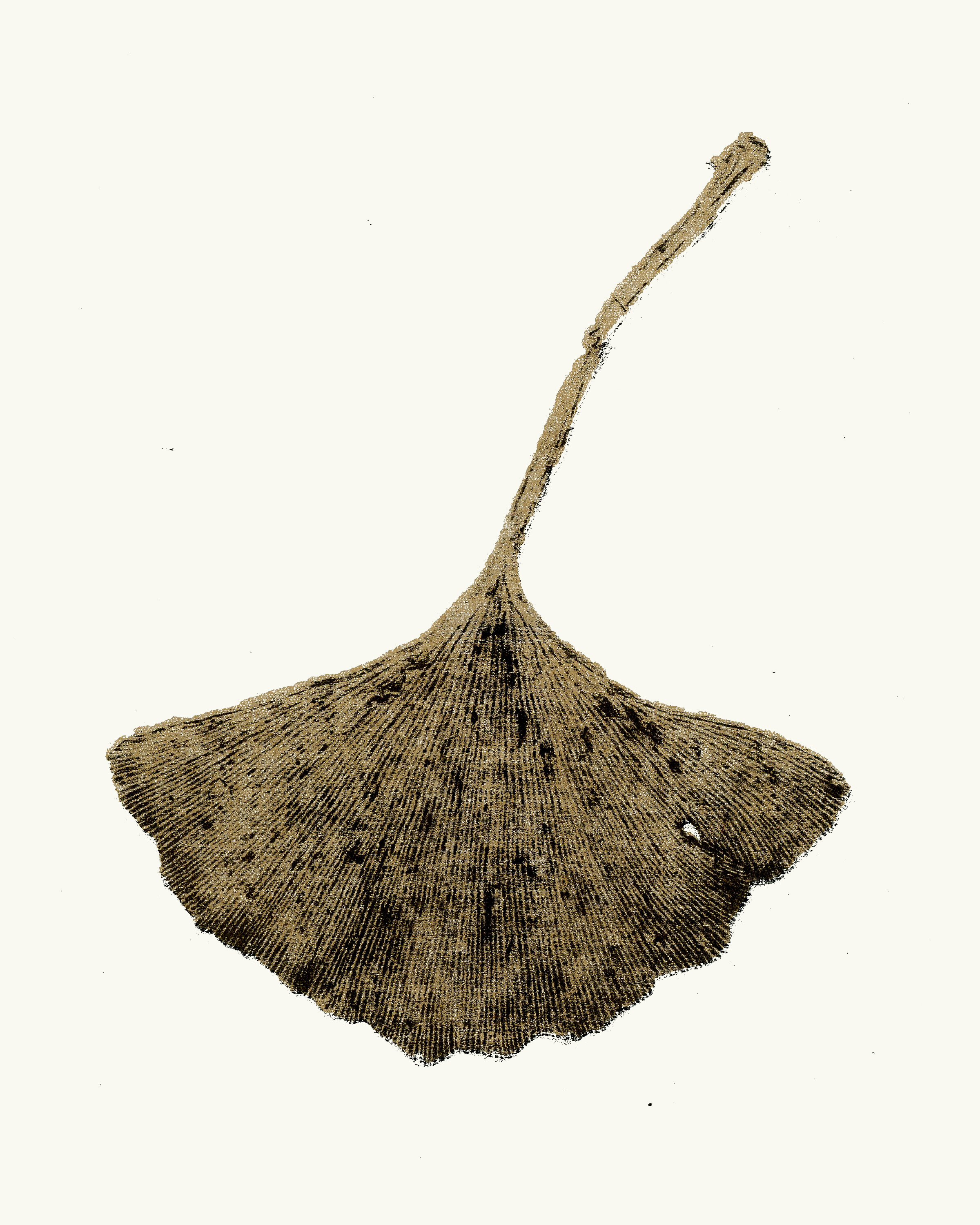
Gingko (2020) by Tim Robertson. Risograph print, black and gold ink

Gingko (2020) by Tim Robertson. Risograph print, black and gold ink

This New Silence (II) by Tim Robertson. From Shelby Park Dreams series (2015).

This New Silence (II) by Tim Robertson. From Shelby Park Dreams series (2015).

This post is part of a series featuring artists involved in our ministry and community in Louisville, Kentucky.

The Essence of Prayer /  by Michael Winters

by McKenna O’Hare

prayer cover.jpg

During my time in school, I took a course called Meditation and Drawing. The idea was a bit foreign to me and even somewhat frightening. I had come to understand meditation as this weird new age practice of emptying one’s mind, and this passage from Luke 11 always came to mind where an evil spirit leaves a person, returns to find “the house” clean and orderly, and therefore, invites seven more evil spirits to join, leaving the person worse off than before. As a newer believer at the time, this made me especially skeptical.

Afraid of what might happen if I achieved this mental clarity/cleansing that meditation seemed designed for, I prayed. I prayed through our guided meditations, and I prayed while drawing. I always had an ongoing stream of internal thoughts flowing because if I allowed my mind to be blank, swept and put in order, I obviously was doomed for destruction. However, what I failed to recognize at the time was that my fear of emptiness negated the reality of the Holy Spirit already dwelling within me. An unclean spirit couldn’t return to its house along with others because it no longer has ownership of the house. As Christians, we house the Holy Spirit; He is who we’ll find at the door.

Amid detangling that revelation, I now had to frame a final project around a personal practice of meditation with the guidance of any resource of choice. With the creative freedom at hand and the lingering caution I felt in regards to meditation, I sought to find a biblically sound, prayerful meditation guide. In my digging, I came across Prayer: 40 Days of Practice by Justin McRoberts and Scott Erickson. This small, devotional-like book consisted of short, guided prayers and meditations partnered with contemplative imagery, and a few suggested practices; that’s it, but it changed my prayer life in such a simple, yet radical way. Justin McRoberts offers profound grace filled one liners, while Scott Erickson invites deep contemplation, an “excavation of the soul” if you will, through his corresponding visual work.

Illustration by Scott Erickson and prayer by Justin McRoberts

Illustration by Scott Erickson and prayer by Justin McRoberts

Within the first pages of the book’s introduction, the reader is encouraged to respond, meditate, excavate, and contemplate. I had been given permission to meditate as a Christian. This immediately shifted my understanding of meditation. It didn’t have to include gongs, mundra hand positions, and hums.  It could simply be a practice of focusing, thinking deeply, and reflecting on our own lives, the lives of those around us, and the presence of God in, through and surrounding it all. Stillness isn’t something to be feared, but instead pursued, for it allows God space to be. In this way, meditation can be an avenue to commune with God himself—a form of prayer. 

So, I am now invited also into unfamiliar territory of prayer. If meditation and contemplating good art can be ways to pray, what else could be? This stirred in me a sense of both curiosity and freedom. We have the ability to train our mind and hearts to the inclination of God in everything we do. This is a simple concept, but a hard thing to implement. However, this idea reoriented what I had previously thought prayer to be. Prayer became more than mere conversation, but rich communion—a practice of abiding and cultivating fellowship with God. We can filter life through the lens of prayer with a heightened awareness of the Lord’s presence among us. In doing so, nearly anything can be prayerful.

Where people once had to travel, sacrifice, and cleanse to access God, we have immediate access to the Father through the Holy Spirit because of the cross of Christ Jesus. God is closer to us than we could imagine; the commute exists within us. Thus, communion is readily available whether it be by means of bowed heads and folded hands or thoughtful words and brilliant images. Ultimately, prayer is less about the mechanics and more about the essence. God is not bound to our human traditions and limitations. He is not put off by our contemplation or even our silence; I have come to understand that He just might even delight in it.


Headshot.jpg

McKenna O’Hare is a contemporary mixed-media visual artist. Her work explores connections within oneself and between others, our surroundings, and the Divine. Working from intuition and using non-objective expression, her work results in final pieces that engage the viewer and provoke contemplation.

Upon graduating with her BFA from Fort Hays State University in Hays, KS, she moved to Louisville, KY, where she currently interns at Sojourn Arts. You can view McKenna’s work at www.mckennaohare.weebly.com and by following her on Instagram @mckenna.robins.


This post is part of an ongoing series where we ask artists and arts professionals to share a piece of artwork that has significantly impacted their formation as a Christian.

Artistic Vision / Divine Revelation /  by Michael Winters

by Michael Winters

"38” oil on paper, by Cameron Alexander Lawrence, now on view at Sojourn Arts through April 11, 2021.

"38” oil on paper, by Cameron Alexander Lawrence, now on view at Sojourn Arts through April 11, 2021.

After the recommendation from  How You Create Podcast host Ben Terry, I recently began reading The Death of the Artist by William Deresiewicz. It’s mostly about contemporary difficulties surrounding art and money (a great resource for an aspiring professional), but early in the book he also tells a story about his introduction to seeing the world like an artist, even if he’s not an artist himself. In a dance criticism class, he came to experience a new way of seeing when his professor gave an assignment:

“She sent us into the world, to simply look at people move. Look, and describe. That course changed my life. I learned that I had never seen the world before, because I’d never bothered to, and I also learned that that is what art and loving art are about: not being a snob, not distracting yourself, but seeing what’s in front of you. Finding out the truth.”

Learning how to see and finding out the truth is a lifelong occupation. The work is never done. Looking at the surface of things, like the way people move out on the street, reveals a treasure trove of information about the true nature of things. This is God’s world and he’s made it incredibly interesting and worthy of attention. Through learning to see things as they are we get glimpses into not just surface-level truth, but even deeper meaning. As Deresiewicz outlines the history of art though, he seems to understand the revelatory quality of artistic seeing, not as a compliment to divine revelation, but as a replacement of it.

“As traditional beliefs were broken down across the eighteenth and nineteenth centuries—by modern science, by the skeptical critique of the Enlightenment—art inherited the role of faith, becoming a kind of secular religion for the progressive classes, the place where people went to meet their spiritual needs: for meaning, for guidance, for transcendence.”

I believe he describes the general movement of history accurately. I don’t mean to argue with that. (Seven Days in the Art World by Sarah Thornton and others lay out a similar understanding.) But for someone committed both to Christianity and to art, what are we to make of this?

As Christians, we believe the divine revelation of God in Christ, known through the Holy Bible. When Amazing Grace sings, “I once was lost, but now I’m found / Was blind, but now I see”, this gift of vision is credited to the amazing grace of God, not merely to a transformative artistic experience.

But just as artistic vision doesn’t replace and cancel out divine revelation, divine revelation doesn’t replace and cancel out artistic vision (or general revelation). We can experience both. Both are real. And when the scriptural revelation of God is combined with the revelations of his creation experienced through our senses, we’re really onto something. I believe accepting both the divine revelation of God in Christ and the revelations available through artistic seeing grant the most fully wakeful vision.

I appreciate William Deresiewicz’s understanding that art is about learning to see and finding out the truth. These are noble aims and like him, I also believe art is a compelling discipline to get us there. In the end though, art is a limited discipline, as is science or politics. Each offer valuable lenses to extend our vision, but they can’t replace divine revelation. We’re dependent on the amazing grace of God.

Until I Can See You: Cameron Alexander Lawrence /  by Michael Winters

by Jordan Lienhoop

IMG_0151_Original 2.jpg

As a painter and poet, Cameron Alexander Lawrence's creative rhythms have led to abundance—he created 35 new works in just two months!—and connection, as his artistic practice helps him be more present to himself and others. His solo exhibition Until I Can See You is a meditation on and a search for that connection between self and others. Cameron’s work offers an opportunity for viewers to look more closely, even beyond the paint into their interior world and that of those around them.

See more of Cameron’s work on Instagram @cameronlawrence, and visit his online storefront to purchase works from the show.

Sojourn Arts' Artist Feature: Cameron Alexander Lawrence

“The Distance Between Two Fires” (2021) by Cameron Alexander Lawrence. Acrylic on canvas, 48 x 48 inches.

“Watchers” (2021) by Cameron Alexander Lawrence. Acrylic on wood panel, 12 x 9 inches.

“More Than We Knew” (2021) by Cameron Alexander Lawrence. Acrylic on wood panel, 12 x 9 inches.

“Veiled Landscape” (2021) by Cameron Alexander Lawrence. Acrylic, spray paint, and oil pastel on canvas, 48 x 36 inches.

“38” (2020) by Cameron Alexander Lawrence. Oil on paper, 16 x 12 inches.

“Nocturne” (2021) by Cameron Alexander Lawrence. Acrylic on canvas, 40 x 30 inches.

This post is part of a series featuring artists involved in our ministry and community in Louisville, Kentucky.

Transcendent Kingdom by Yaa Gyasi: A Faith in Fiction Discussion Guide /  by Michael Winters

SYNOPSIS (via Penguin Random House)

Screen Shot 2021-02-23 at 8.36.47 PM.png

Gifty is a sixth-year PhD candidate in neuroscience at the Stanford University School of Medicine studying reward-seeking behavior in mice and the neural circuits of depression and addiction. Her brother, Nana, was a gifted high school athlete who died of a heroin overdose after an ankle injury left him hooked on OxyContin. Her suicidal mother is living in her bed. Gifty is determined to discover the scientific basis for the suffering she sees all around her. But even as she turns to the hard sciences to unlock the mystery of her family’s loss, she finds herself hungering for her childhood faith and grappling with the evangelical church in which she was raised, whose promise of salvation remains as tantalizing as it is elusive.

Transcendent Kingdom is a deeply moving portrait of a family of Ghanaian immigrants ravaged by depression and addiction and grief–a novel about faith, science, religion, love. Exquisitely written, emotionally searing, this is an exceptionally powerful follow-up to Gyasi’s phenomenal debut.

PERSONAL REFLECTION by Michael Winters

When I was younger I somehow picked up the idea that faith wasn’t supposed to change. You were supposed to place your faith in Jesus and then you were just supposed to always “believe.” More recently I heard someone teach that Christian maturity requires that your ideas about God will change and this strikes me as true. In church-based ministry over the years I’ve seen many people come to a place where their faith needed to change in order to mature, but instead they just cast aside belief and tried to ignore eternal questions. In reading of Gifty’s childhood faith and what happens as it’s confronted by tragedy and time, we read a testimony of how a life of faith can go. It’s not a triumphant or idealized story, and though it’s fictional, there’s much truth in it.

Transcendent Kingdom was a perfect pick for our Faith in Fiction reading group. Like the name of the group says, we pick books where faith plays an important role in the story, placing faith in the power of fiction to help us better understand life and our place in it. In addition to the themes directly related to faith, Transcendent Kingdom also has so many insights into how relationships work or don’t work, the state of the American dream, and the crisis of addiction and mental health disorders. The book includes some difficult topics and doesn’t shy away from harsh language, but provides a story well worth considering. I, and others in our discussion group, felt the book evoked a lot of empathy, but I also felt judgment toward some of the characters. That’s one of my takeaways—maximize and act on the empathy, and let the judgment fade away. The story makes clear that our words and actions have consequences in others’ faith journeys.

QUESTIONS FOR DISCUSSION

  1. In Gifty’s early childhood, she has a sweet and honest child-like faith in God. What did you notice about her beliefs before her brother’s death?

  2. Nana’s death is a turning point in Gifty’s life and in her faith in God. What happens to Gifty after her brother’s death? How does she try to cope with this tragedy?

  3. During her PhD studies with mice, Gifty realizes she thinks of the work as holy.

    “The collaboration that the mice and I have going in this lab is, if not holy, then at least sacrosanct. I have never, will never, tell anyone that I sometimes think this way, because I’m aware that the Christians in my life would find it blasphemous and the scientists would find it embarrassing, but the more I do this work the more I believe in a kind of holiness in our connection to everything on Earth. Holy is the mouse. Holy is the grain the mouse eats. Holy is the seed. Holy are we.”

    What do you make of this?

  4. Pastor John and the Pentecostal church he leads in Alabama are helpful to Gifty’s family in some ways, but they are also revealed to be deeply flawed. How did you feel toward the characters from the church?

  5. On page 44, Gifty describes the scientific question she’s trying to answer: “Could optogenetics be used to identify the neural mechanisms involved in psychiatric illnesses where there are issues with reward seeking, like in depression, where there is too much restraint in seeking pleasure, or drug addiction, where there is not enough?”

    She seems to see her mom’s deep depression and her brother’s addiction as two sides of the same coin. Her experiences with them definitely seem to drive her work. What else do you think contributes to her choice of work and the high level at which she desires to perform?

  6. Gifty’s family doesn’t overtly display affection through words or touch. How do they relate emotionally? What’s the style of their communication? And how do you think these ways of relating contributed to the outcomes they experienced?

  7. There are many examples of overt racism described in the book. How did racism affect Gifty and her family?

  8. Gifty says, “I used to believe that God never gives us more than we can handle, but then my brother died and my mother and I were left with so much more; it crushed us. It took me many years to realize that it’s hard to live in this world...But to be alive in the world, every day, as we are given more and more and more, as the nature of “what we can handle” changes and our methods for how we handle it change, too, that’s something of a miracle.”

    Toward the end of the book, Gifty retains some sense of her religious upbringing, and the end of the book sees her sitting in an empty church with eyes open, not praying. Do you think there’s been some resolution for Gifty? How did you feel at the end of the book?

  9. Are there any takeaways for you? Any one thing you want to remember from reading this book?

...some other force (the Spirit??) is leading /  by Michael Winters

by Michael Winters

We’ve got a new exhibit going up here in the Sojourn Gallery this week. It’s a series of paintings by Cameron Alexander Lawrence gathered under the title Until I Can See You. I’ve really enjoyed talking and emailing with Cameron while the work has been developing. Recently he wrote:

“…I can't really explain it—there's this momentum behind the work that feels very, very right, but it's different from what I've done before. In a way, it almost feels like what I paint is out of my hands and some other force (the Spirit??) is leading.”

“The Distance Between Two Fires” by Cameron A. Lawrence.  Acrylic on canvas. 48 x 48 inches

“The Distance Between Two Fires” by Cameron A. Lawrence. Acrylic on canvas. 48 x 48 inches

I’m wondering how many others have had a similar experience. Over the years I’ve heard many people express a similar feeling. Very rarely I think I’ve felt it myself. You get to a stopping point and look at what you’ve made. You know you made it and yet it feels like it wasn’t totally you that made it.

Cameron wondered with question marks whether it could be the Holy Spirit and others have suggested the same with more or less certainty. For example, our current intern McKenna O’Hare’s website homepage quotes André Gide: “Art is a collaboration between God and the artist, and the less the artist does the better.”

Or, for another example, on the Cultivated podcast’s excellent recent episode with Makoto Fujimura, Mako says, “If there’s one thing I know for sure, God creates through us.”

How can he be so certain? Our co-creation with God can’t be proven, but by faith, we can lean into it. In our lives and in our work, we can pray and hope to live our lives in tune with the Spirit. Maybe our artistic practice can even be time to practice listening for the voice of the Spirit. It’s incredibly mysterious. Jesus himself seems to admit the mysterious nature of the Spirit. In John 3, after blowing the mind of Nicodemus by telling him no one can see the kingdom of God without being born again, he elaborates: 

“Very truly I tell you, no one can enter the kingdom of God unless they are born of water and the Spirit. Flesh gives birth to flesh, but the Spirit gives birth to spirit. You should not be surprised at my saying, ‘You must be born again.’ The wind blows wherever it pleases. You hear its sound, but you cannot tell where it comes from or where it is going. So it is with everyone born of the Spirit.”

May this be true of your life. May you be like one born again and like one blown to and fro, not by waves of uncertainty, but by gusts of the Spirit.

Human Complexity in Brandon Sanderson's The Stormlight Archives /  by Michael Winters

by Kathleen Childs

"I just had my long-held assumptions about someone shattered in a brief moment. I'm wondering if every person I pass has similar depths, and if there's any way to avoid the mistake of judging them so shallowly that I'm shocked when they show their true complexity." — Brandon Sanderson, Bands of Mourning.

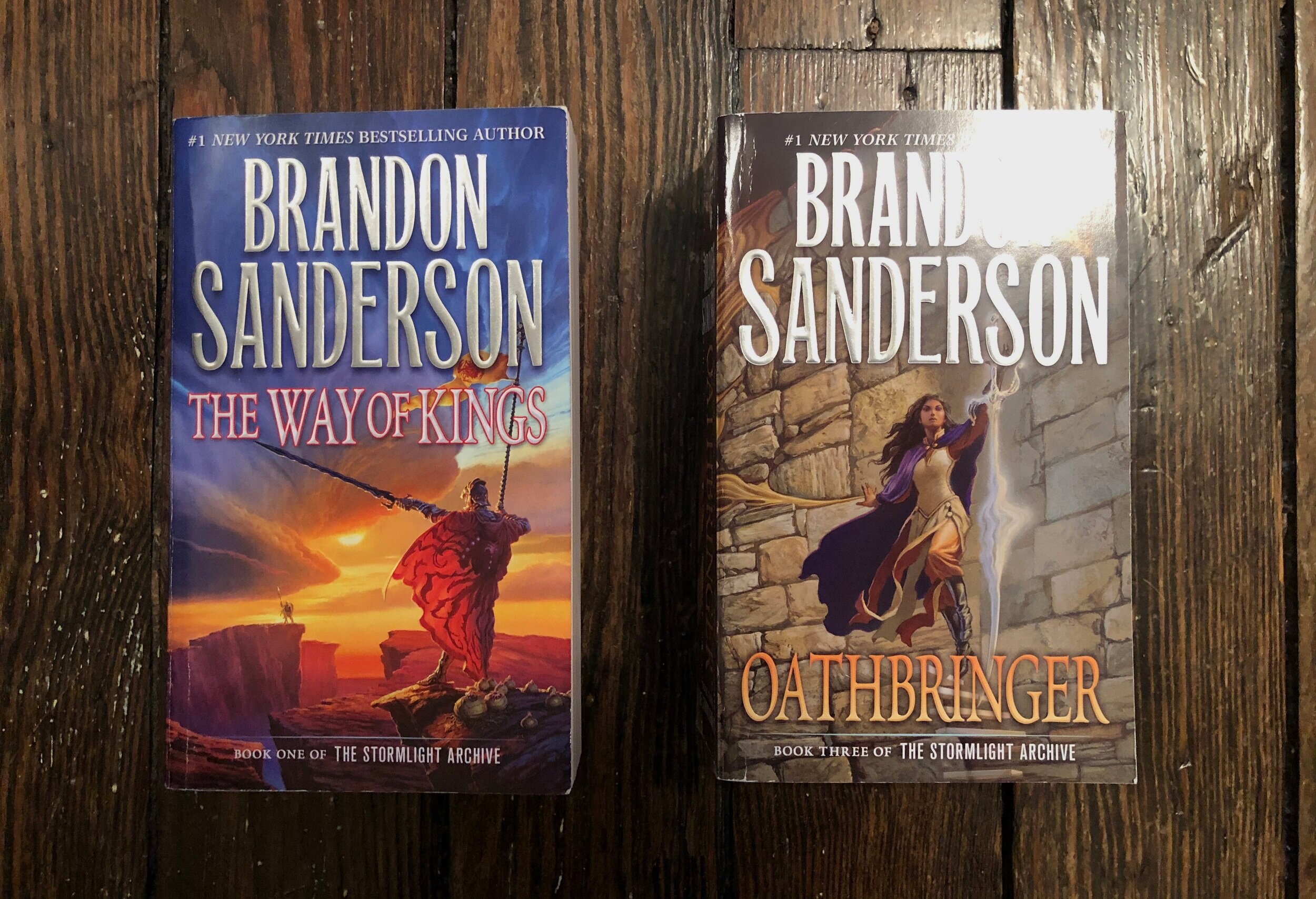
Kathleen’s copies of Book One and Book Three of The Stormlight Archive by Brandon Sanderson

Kathleen’s copies of Book One and Book Three of The Stormlight Archive by Brandon Sanderson

I discovered the author Brandon Sanderson my junior year of high school. In hindsight I’d known about him for a while, as I had multiple friends recommend a couple of his series to me, but I’d ignored them. It took my best friend, of now ten years, revealing that her favorite book of all time was Mistborn by Brandon Sanderson for me to actually pick up one of his books. It was love at first sentence. His eloquent storytelling never left a dull moment, and I was brought into a world of beautiful writing that I had previously thought impossible. The themes I found playing out in his writing were magnificent and struck a chord inside of me. I was hooked. I needed more of his writing; thus I found his magnum opus: The Stormlight Archives. 

The Stormlight Archives is currently a four book series of gargantuan page counts. It details the lives and thoughts of multiple key players as the world of Roshar comes to what appears to be a climactic end. Sanderson drives his story through beautifully written prose that forms characters who are unique and broken and human. Each book in the series thus far has focused on a different character’s specific journey as they deal with and overcome past trauma and how that affects them as they move forward. We are allowed to intimately know the characters we are following, while also learning to invest in the events happening around them—this style of character driven plot fascinated me. 

At the time of reading these books I was coming out of three years of depression and was struggling to relate to and invest in the people I had blown off for many years. One of the things that I began to realize was that for basically my entire life I had failed to grasp one simple truth: the inherent complexity of every human. It is easy to forget I’m not the only person on the planet.

Our tendency, or at least mine, is to think that all of the people around me are just robots who power off when I’m not in the room. I forget that the person sharing the studio with me also has a life after work. She has a family I haven’t met and problems I’ve never even seen. She has joys and fears and loves and hates that I may never know. Her thoughts in her head are just as complicated and convoluted as mine. But it's not just her—it’s everyone I could ever interact with. 

The random man I pass on the street, the woman bagging my groceries, my parents, everyone. Even with the reminder of seeing people every day, how easy it is to forget that God has created everyone to be His image bearer and each is uniquely and wonderfully made. Sanderson's The Stormlight Archives, as well as his other writings, was one of the final blows of the hammer to nail this truth into my head. 

Kathleen’s copy of Book Four of The Stormlight Archive by Brandon Sanderson

Kathleen’s copy of Book Four of The Stormlight Archive by Brandon Sanderson

The first book in the series, The Way of Kings, focuses on Kaladin Stormblessed. He isn’t the only character we follow but we get a much more in depth character study of him. We watch as he starts overcoming prejudices and learns to trust in himself and hope again. We see his story from childhood to adulthood. By the end of the book we know him in a very intimate way and have learned to sympathize with his problems and ideals. 

The truly interesting bit begins when we start Book Two, Words of Radiance, and realize that Kaladin is no longer the focus character. He remains a key character and has a significant number of chapters dedicated to his perspective, but the focus of the book is a character named Shallan Davar. Sanderson introduces her in the first book, following her viewpoint a few times, but in Words of Radiance her importance is emphasized. We get to know her in the same intimate way that we got to know Kaladin in Book One. It produces a new perspective and gives us a whole new realm of understanding of her decisions and the events happening in the world of Roshar. 

The focus character shifts again in Book Three, Oathbringer, and again in Book Four, Rhythm of War. The continual shift in character forces readers to view the story from a variety of perspectives, leading us to love and respect those characters in an intimate way and making sure we fully understand their differing perspectives. It drives home that everyone has a life and a story that I know nothing about. I don’t know what past events are influencing the decisions people are making right now. I don’t know what has colored the lenses that they are seeing the world through. Reading these wonderful books opened my eyes to the complexity of humanity. 

Once I realize and accept this complexity in humans, I am forced to examine God and recognize that the complexity of a human is nothing in comparison to how complex He is. He created everything and He can fully comprehend me, fully comprehend my roommates, and even fully comprehend the nine other girls living in my house. Not only that, He fully knows and understands every single person on the planet, all at the same time. I struggle to remember the complexity of the person standing right next to me, but God doesn’t even bat an eye at being able to intimately understand all 7.7 billion people on the planet. He is so vast and infinite that we can barely hope to start to understand a sliver of Him. 

Yet He has let us have just that: a sliver, found in the person next to me, marred and clouded though it may be by sin. In every person I will ever interact with—from the small child to the wizened old woman—there is a sliver of our Majestic Creator peeking out through their unique complexity. Every day I try to remind myself of this simple truth, and Brandon Sanderson’s writing has played a huge role in helping me understand it. 


RAN_9080.jpg

After graduating from Rosslyn Academy in Nairobi, Kenya, Kathleen moved to Louisville to serve with Love Thy Neighborhood for a year with Sojourn Arts. In the Fall she hopes to attend North Greenville University to study Production Design. As an artist, Kathleen loves creating detailed graphite portraits and playing with paint.

You can view her work by following her on Instagram @kathleenchilds_art.


This post is part of an ongoing series where we ask artists and arts professionals to share a piece of artwork that has significantly impacted their formation as a Christian.
Mary Oliver's Devotions /  by Michael Winters

by Michael Winters

For Christmas, I received a copy of Mary Oliver’s poetry collection, Devotions. I’d like to share here what is probably her most famous poem, “The Summer Day.” I bet you’ve heard the last two lines even if you didn’t know from where they came.

“The Summer Day” by Mary Oliver:

Who made the world?
Who made the swan, the black bear?
Who made the grasshopper?
This grasshopper, I mean -
the one who has flung herself out of the grass,
the one who is eating sugar out of my hand,
who is moving her jaws back and forth instead of up and down -
who is gazing around with her enormous and complicated eyes.
Now she lifts her pale forearms and thoroughly washes her face.
Now she snaps her wings open, and floats away.
I don’t know exactly what a prayer is.
I do know how to pay attention, how to fall down
into the grass, how to kneel down in the grass,
how to be idle and blessed, how to stroll through the fields,
which is what I have been doing all day.
Tell me, what else should I have done?
Doesn’t everything die at last, and too soon?
Tell me, what is it you plan to do
with your one wild and precious life?

There’s so much to reflect on here. Between her first question about the Creator to her last question posed to the reader, the poet is paying attention to the world at hand. She asks who made the grasshopper, but clarifies this grasshopper. Like any good artist, she’s interested in the particulars of what she finds in front of her.

She says, “I don’t know exactly what a prayer is. / I do know how to pay attention.” In this contrast of prayer and paying attention, might she be suggesting that the two have much to do with each other?

And when she comes to that last striking question, “what is it you plan to do / with your one wild and precious life?", my mind goes into business mode. I think of making plans and resolutions. I assess. But surely, in the context of the poem, this is not what she has in mind. She’s celebrating a decidedly unproductive day and then confronting us: “Tell me, what else should I have done?”

A couple weeks ago in Sojourn Midtown’s “Planted” sermon series, Pastor Nathan preached on Christian meditation, encouraging us to root ourselves in the scriptures this coming year. He encouraged us to pay attention to the Bible and let that attention lead us into prayer. For me, I think I’ll plant myself in Psalm 16 and the Gospel of John. But I also want to plant myself in the particulars of the world in front of me. Like Mary Oliver I want to know “how to be idle and blessed.”

Whether paying attention to a grasshopper or the scriptures, time spent meditating on beauty, truth, and goodness before God is no waste.

Jesus, the most creative person who ever lived /  by Michael Winters

by Michael Winters

What did Jesus make during his earthly ministry?

I like to ask this question in a group context and see what answers come to the surface. People usually first think of the most tangible or art-like expressions of making. Someone will point out he was a carpenter (Mark 6:3). Someone will remember that he scribbled in the sand before saving the woman caught in adultery with his words, “Let he who is without sin cast the first stone.” People will think of the miracles. Jesus turned water into wine. Jesus made the blind see, the lame walk. He made fish and loaves of bread multiply to feed thousands. People will think of his famous parables and so many phrases that have become part of our everyday speech.

“A Place at the Table”, charcoal on paper by Craig Hawkins, part of his series “Emmaus Road”

“A Place at the Table”, charcoal on paper by Craig Hawkins, part of his series “Emmaus Road”

Then people will think of salvation. Jesus made the way to be reunited with God the Father. And finally, people will think of the kingdom of God. Jesus made the kingdom of God come near and grow like a mustard seed.

In The Divine Conspiracy, Dallas Willard writes, “Saying Jesus is Lord can mean little in practice for anyone who has to hesitate in saying Jesus is smart…He is not just nice, he is brilliant. He is the smartest man who has ever lived.”

Similarly, we can also say Jesus is the most creative person who has ever lived. The effects of his creative work have reverberated through the centuries and have spread across the entire globe.

Jesus’ work while living an incarnate life 2000 years ago—his words and his actions—created a revolution larger and more pervasive than any other in history. Many in his own time wanted him to create a different kind of revolution. They wanted him to create a fast-acting attack on Roman rule. He instead made a peaceful revolution that worked more like yeast working through dough. Jesus’ words and actions spread through Israel and the Roman empire, and they continue working their way through all the religious and political powers today, altering the course of history forever.

Jesus not only lived a perfectly creative life in his time on Earth, but he is also Creator of the universe together with God the Father and the Holy Spirit. Colossians 1:15-17 ecstatically celebrates this:

“The Son is the image of the invisible God, the firstborn over all creation. For in him all things were created: things in heaven and on earth, visible and invisible, whether thrones or powers or rulers or authorities; all things have been created through him and for him. He is before all things, and in him all things hold together.”

Jesus. All things have been created through him and for him. He is before all things, and in him all things hold together.

Our life is held together by the most creative person who ever lived.

Generosity From Artists, Generosity To Artists /  by Michael Winters

by Michael Winters

In my experience, artists are some of the most generous people on the planet.

I recently received an unexpected small box in the mail. I love receiving mail and when the return address told me it was from Gene Schmidt, my excitement doubled. Gene was the first artist we showed in our current gallery space when we opened in 2012. It was an exhibit documenting his project Lovetown, PA.

And now here was this generous gift of a box in my mailbox waiting to be opened. As I unwrapped cardboard and tissue paper, a curious small object emerged.

It’s an old fabric measuring tape wound around some unknown core, in total larger than an egg, smaller than a baseball. The measuring tape is aged, and I wonder where it has been and what it has measured. For some reason it reminds me of my grandfather. The tape lies surprisingly flat to itself. It’s tight and seems to have no chance of unraveling. It seems like it must have been glued down but there’s no evidence of glue. And, I think meaningfully, there seems to be no chance of this object functioning to measure anything again. It has left the world of simple utility and now lives in the realm of art, where there’s generally no standard unit of measure.

Mini-Measurement by Gene Schmidt, gifted to the author.

Mini-Measurement by Gene Schmidt, gifted to the author.

Gene started his art career measuring pretty precisely, though poetically, in his first major project, Manhattan Measure. Manhattan Measure was what it sounds like: Gene measured Manhattan. He walked the length and width of Manhattan with thousands of red yard sticks, laying down one yard stick at a time, never using the same yard stick twice. Since then he’s continued the measurement theme, but moved towards things impossible to measure.

Documentation of Manhattan Measure, 2006-2008. Photograph by Alicia Hansen.

Documentation of Manhattan Measure, 2006-2008. Photograph by Alicia Hansen.

In Lovetown, PA, completed in 2010, Gene laser cut hundreds of floor tiles to spell out the entire text of 1 Corinthians 13: “Love is patient. Love is kind…”. With just one letter on each tile, he laid the tiles out as he walked through the city. When he got to the end of the passage, he’d pick them up and start again. Coming after Manhattan Measure, his project Lovetown, PA can also be viewed as a city-wide measurement, though the means of measuring is no longer bound to the clear calculations of yardsticks. In Lovetown, PA the unit of measure becomes a letter, which becomes a word, and then a full declaration of love, or at least a declaration of what love is.

Documentation of Lovetown, PA by Gene Schmidt. Photograph by Alicia Hansen.

Documentation of Lovetown, PA by Gene Schmidt. Photograph by Alicia Hansen.

Installation view of Lovetown PA by Gene Schmidt at Sojourn Arts, 2012.

Installation view of Lovetown PA by Gene Schmidt at Sojourn Arts, 2012.

Now that Gene is making these Measurements sculptures, of which my gift was a mini-measurement, what does it mean that these measuring devices can no longer fulfill their function? I’m not sure exactly, but it makes me think of things that can not be measured precisely—the true value of art, generosity, grace, gifts.

And there are things better left un-measured. 1 Corinthians 13:5 tells us love “keeps no record of wrongs.” Love doesn’t keep the score on wrongs. It’s not worried about measuring.

Measurement by Gene Schmidt

Measurement by Gene Schmidt

In my work with artists over the years, I’ve been impressed over and over again with the generosity of artists. Gene’s a good example, but there have been literally hundreds of other generous artists pass through our community too. They don’t seem concerned about keeping record of all they’ve given. After over a dozen years of arts ministry at Sojourn, the generosity from artists has been one of the biggest encouragements and one of the most common observations.

One of my hopes for the coming year is that we would witness as much (or more!) generosity going to artists as coming from artists.

Below are some ways you might consider being generous towards an artist whose work you admire:

  1. Buy art. An artist needs to make money in order to keep producing their work. The pricing of art is notoriously obscure, and often wildly fluctuates, but to support an artist don’t just wait until you can get a steal of a deal. Buying directly from an artist is great, but galleries or other retailers selling for an artist are part of the support system and are worthy of support as well.

  2. Send an artist a gift card or buy them lunch. If it’s someone you know or have a mailing address for, send them something to say thank you for the benefit you’ve already received from their work.

  3. Ask what supplies they need and provide them. Making art is often expensive. If you’d be willing to front some cost for an artist to make something, that would blow their mind.

  4. Give a monthly contribution. Some artists, like Andy Cenci and Kelly Kruse, have Patreon accounts so you can support them in a small dollar amount each month and receive perks for doing so. But even if an artist doesn’t have a Patreon account, you could suggest giving a particular dollar amount monthly and agree upon some sort of arrangement where you receive an artwork at the end of 12 months.

  5. Be generous with encouragement. If you like an artist’s work, find out how to get ahold of them and tell them!

  6. And tell others. Online or in person, be a fan and share what you appreciate about their work.

Embedded in Story: Mandy Cano Villalobos /  by Michael Winters

by Jordan Lienhoop

Screen Shot 2020-12-07 at 9.43.30 AM.png

According to her mother, multidisciplinary artist Mandy Cano Villalobos “popped out of the womb drawing,” creating galleries of her work down the hallway of their apartment building as a child. Even her material choices, which range from pomegranate seeds to human hair to old family clothing, have been shaped by her childhood experiences and interests, forming an artistic vision and practice embedded in story.

Artwork from her series Magnificat and Cor are currently in the sanctuary for our Advent series Wrapped in Flesh. You can view the installation photos here.

Sojourn Arts' Artist Feature: Mandy Cano Villalobos

See more of Mandy’s work, including her site installations, on her website and on her Instagram @mandy_cano_villalobos.

“Magnificat XV” (2019) by Mandy Cano Villalobos. Cloth, string, and imitation gold.

“Magnificat XV” (2019) by Mandy Cano Villalobos. Cloth, string, and imitation gold.

“Magnificat X”  (2019) by Mandy Cano Villalobos. Cloth, string, and imitation gold.

“Magnificat X” (2019) by Mandy Cano Villalobos. Cloth, string, and imitation gold.

“Solace in Blue” (2019) by Mandy Cano Villalobos. Imitation gold on wine stained paper, 7 x 9 inches.

“Cor Aurum I” (2019) by Mandy Cano Villalobos. Cloth, wood, metal and imitation gold.

“Cor Aurum I” (2019) by Mandy Cano Villalobos. Cloth, wood, metal and imitation gold.

“Cor Aurum II” by Mandy Cano Villalobos, 2019. Cloth, wood, metal and imitation gold.

“Cor Aurum II” by Mandy Cano Villalobos, 2019. Cloth, wood, metal and imitation gold.

“Prince of Holes” (2018) by Mandy Cano Villalobos. Imitation gold on hand scorched rag, 9 x 12 inches.

This post is part of a series featuring artists involved in our ministry and community.

Real or Merely Communal: Arthur Miller's The Crucible /  by Michael Winters

by Savannah Hart

There’s just nothing quite like live theatre. I don’t think anything can be a good enough stand-in for the experience.

The university from which I graduated last year hosts annual trips to the Stratford Shakespeare Festival in Stratford, Canada. Being in the theatre crowd, I joined my friends on the trip my senior year, and witnessed a magical level of quality in storytelling. The talent of those actors was breathtaking. My friends and I vowed to make our own trips even after graduation, since it was only about an 8-hour drive away. 

Last fall in 2019, a few of us made that happen. We saved up our own money, chose the two shows that were must-sees for us, and blew some well-spent cash on the tickets.

Stratford brings the Bard’s stories to life, but also many other renowned plays. The pair we chose thematically went hand in hand: Shakespeare’s Othello, and Arthur Miller’s The Crucible. And that pairing ended up wrecking me a bit.

For those of you who are familiar with The Crucible, you will easily understand the rest of my thoughts. For those of you who aren’t, you need to know that the play, similar to Othello, is about the truth—about an entire village in Salem, Massachusetts in the 1600’s miserably attempting to get to the truth, about the seemingly rampant presence of witchcraft among the villagers. I won’t describe the plot any further, for Miller weaves such a brilliant narrative with articulate complexity that the script is absolutely worth the read. But the uncertainty, the manipulation, the stubborn blindness, characters striving to denounce the lies of other characters—the struggle taking place on the stage stirred deep pockets of my mind.

Photography by Cylla von Tiedemann

Photography by Cylla von Tiedemann

I left the theatre with tears still in my eyes, exiting in silence with my friends through the sea of people. Like a good art piece should evoke, I had to process my thoughts on paper when I got back to my hotel room that night. Here’s what I wrote in my journal, next to some leafless trees I scribbled that mimicked the set design:

“Evidence. Proofs. Reverend Hale [a primary character] believed in the witchcraft and demonic presence in Salem because of the ‘far too many proofs.’ . . . Hale was already persuaded before he arrived. He believed as he thought, and he interpreted the evidence the way he’d decided and desired. Evidence can support that which it is coaxed to support. Where do we do this, God? . . . Here in Salem was a Scripture-originating community, blended with the norms of their time, their stacked books of added knowledge, their social constructs of authority . . . Can I ask for You to be proven without already desiring You to be so?”

My experience with that work of art was one in a chain of events constituting a long wrestling journey with epistemology, or how we know what we know. My move to college was a move from one Christian circle to another, however the Christian circle of college encompassed a lot more: a few thousand people coming from their own subcultures of Christianity to an environment that strongly pushed its own Christian subculture. I was introduced to several more interpretations of the truth than I had previously known were allowed to be considered credible. I was suffering from a deficiency in awareness of other denominations—of other microcosms of believing—of other cultures of knowing. I remember finishing my last theology class of college and thinking, “Wow…there’s a lot less consensus than I thought there was.”

This, of course, was disheartening, at times exasperating. Why do there seem to be so many ‘versions’ of the truth? And while many of my friends were responding to this frustration by giving up and fabricating their own preferred ideas, I was determined to hold to the truth that there is such a thing, and that perhaps our aim is to find ‘the truest version of the truth.’

Photography by Cylla von Tiedemann

Photography by Cylla von Tiedemann

Seeing The Crucible a few months after graduating reminded me not only of this journey, but of my own inability to be fully rid of preconceptions. Entangled in our contexts, unavoidably influenced by our communities, we are all (myself included) broken comprehenders. The story made me face the question, “Can I fully embrace the conclusions I have come to, if I know I can’t possibly come to them objectively? Can I fully be at peace with submitting to You, God, if I know my journey to You began with a bias?”

Without giving away the play’s ending, protagonist John Proctor finally and sacrificially surrenders for the one thing he knows to be true, even though the audience will be left with a Salem still in a horrendous state of upheaval. The absence of resolution does not mean the absence of resolve. 

Arthur Miller didn’t give me answers. He gave me extremely good and crucial questions for living as a broken comprehender.

How is this belief or idea influenced by my context?
What do I treat as proof that I should rather treat as evidence?
Though I cannot eliminate presuppositions, can I name them?

Why do we believe what we believe.

I must finish, for now, where I currently am with the question that the Stratford stage and its players gave me to face: 

Our journeys of belief and epistemology are far more experiential and relational—less intellectual—than we like to admit, because that is the nature of our creaturehood. Inescapably. It is the way we were designed. And God—the truth that is a Person, that is an Incarnate Gospel—continues to reveal Himself through experiential, relational, and intellectual evidence better than anything else I’ve experienced the world offering.


IMG_6810_2.jpg

Savannah Hart is an emerging mixed-media sculptor living in Louisville, Kentucky. She collects and repurposes discarded material or objects and assembles them into sculptural diagrams of thought to explore the spiritual questions she ponders. The most continual question in her work is, "How does the finite interact with the Infinite?" She finds that altering reclaimed objects pre-packed with narrative lends itself best to this both objective and non-objective focus.

Savannah seeks out ways to use art as social activism and healing for the community in which she lives, working at the cross-section of art and ministry. She is currently an intern with Love Thy Neighborhood and Sojourn Arts.

You can view her work by following her on Instagram @savannahhartwork.


This post is part of an ongoing series where we ask artists and arts professionals to share a piece of artwork that has significantly impacted their formation as a Christian.

Creative Work Under the Creator /  by Michael Winters

by Michael Winters

In a wonderful 2015 talk, “Three Visions Necessary for the Christian Artist,” pastor and musician Vito Aiuto argues a Christian artist needs vision regarding three crucial questions:

  1. Who is the world?

  2. Who is God?

  3. Who am I?

In this post, we want to consider that second question, “Who is God?”

Obviously this is a gigantic question. Here we just want to scratch the surface, hoping to open up some new ways of considering what a vision of God might mean for artists. Christians believe in the triune God, the Trinity: Father, Son and Holy Spirit. For this post, we’ll focus on God the Father as Creator and in future posts we’ll consider what it means to be an artist in light of Jesus and the Holy Spirit.

There are two basic ways we can know something about God - The Bible (special revelation), and God’s creation (general revelation). Here, we’ll briefly look at both of these approaches to consider how a deepening relationship to God the Creator may change us and our art.

God revealed through the Bible

Below are a selection of direct quotes taken from the Old and New Testaments, direct statements describing who God is…

God is God; He is the faithful God.

God is a consuming fire, a jealous God.

God is the one who goes across ahead of you like a devouring fire.

God is your refuge, and underneath are the everlasting arms.

God is God in heaven above and on the earth below.

God is my rock, in whom I take refuge.

God is with us; He is our leader. 

God is greater than any mortal.

God is exalted in His power. Who is a teacher like Him?

God is a righteous judge, a God who displays His wrath every day.

God is my rock, in whom I take refuge.

God is my help; the Lord is the one who sustains me.

God is a God who saves.

God is the strength of my heart and my portion forever.

God is a sun and shield.

God is in heaven; He does whatever pleases Him.

God is full of compassion.

God is spirit, and his worshipers must worship in the Spirit and in truth.

God is the builder of everything.

God is light; in Him there is no darkness at all.

God is greater than our hearts, and He knows everything.

God is love. Whoever lives in love lives in God, and God in them.

All of these statements describing who God is come after the Bible’s first revelation of who God is in Genesis 1 and 2. These first chapters of the Bible reveal God as Creator. The Bible begins, “In the beginning God created the heavens and the earth.” God speaks the cosmos into existence. He says, “Let there be light,” and there was light. He spoke all of it into being and called it good. God said, “Let us make mankind in our image, in our likeness.” God proceeds to do just that, to make mankind in God’s “image,” in some important sense, like God.

If humans are created like God, what does this mean? Among other things that could be said, it must mean that we, like God, also have creative capacity.

According to this foundational biblical story, every human being is God’s creation. All the earth and all the universe is God’s creation. This understanding gives us humans an honored place in the created order. We are not merely a happenstance of biological function. We are God’s creatures. God made each of us and knows us intimately. As Psalm 139:13-14 says,

“For you created my inmost being;
you knit me together in my mother’s womb.
I praise you because I am fearfully and wonderfully made;
your works are wonderful,
I know that full well.”

“The Temptation and Fall of Eve” by William Blake, 1808.

“The Temptation and Fall of Eve” by William Blake, 1808.

The creation account puts humans in an honored position, but also a humble position. Genesis makes it clear who is in charge. According to this view, we are not God. God is God. God has created humankind and given us responsibility (Genesis 1:26-28). This responsibility we can call “creative power.”

God revealed through God’s creation

Our creative power, used for good or evil, happens in the context of God’s creation and always in relationship to the Creator. Our day-to-day life on planet Earth is where we relate to God. God is not a “character” in the Bible. He’s the God of creation, God of planet Earth. The earth is creation, not merely “nature.” All of us—whether Christian or atheist or otherwise—growing up in the 20th or 21st century have inherited a worldview that doesn’t really line up easily with this truth. Modern thought has tended to reduce creation to its composite parts. It has often failed to see the interconnectedness within creation itself and even more crucially creation’s connection to the Creator. We’ve inherited a way of thinking that doesn’t actually expect to experience God in the world. Yet “the earth is the Lord’s and all the fullness thereof” (from Psalm 24). This is the only world we now have in which to relate to and experience God. If we’re going to consciously relate to God within our lifetimes, it must happen here.

Once this reality sinks in, we enter a re-enchanted world where soil and seeds, water, bread and wine are themselves and yet transcend themselves. In short, we develop a sacramental vision. A sacramental vision is a way of seeing that integrates the visible and invisible, the divine and the human. A sacramental vision sees God’s grace active within physical reality.

Similar to how we can know something of an artist by getting to know what the artist has made, we can know something of God by considering what God has made. In Romans 1, Paul makes it sound obvious: “For since the creation of the world God's invisible qualities—His eternal power and divine nature—have been clearly seen, being understood from what has been made, so that people are without excuse.” If this is true, what can we infer about God based on the vastness of the universe? And can we infer anything about God based on the existence of octopuses?

What does this mean for us as artists?

When we grow in our knowledge of God, either through the scriptures or through our life experience in God’s creation, we grow an overflow from which we ourselves can create. For artists, this inevitably makes its way into our work, directly or indirectly. Our understanding of God will always be terribly incomplete, but with attention, it will continue to change and grow. Our understanding of our own place in creation will also change and grow. Our art is a space to work out these understandings. We seek to know God and God’s creation as wholly and clearly as we can and attempt to give witness to that vision.
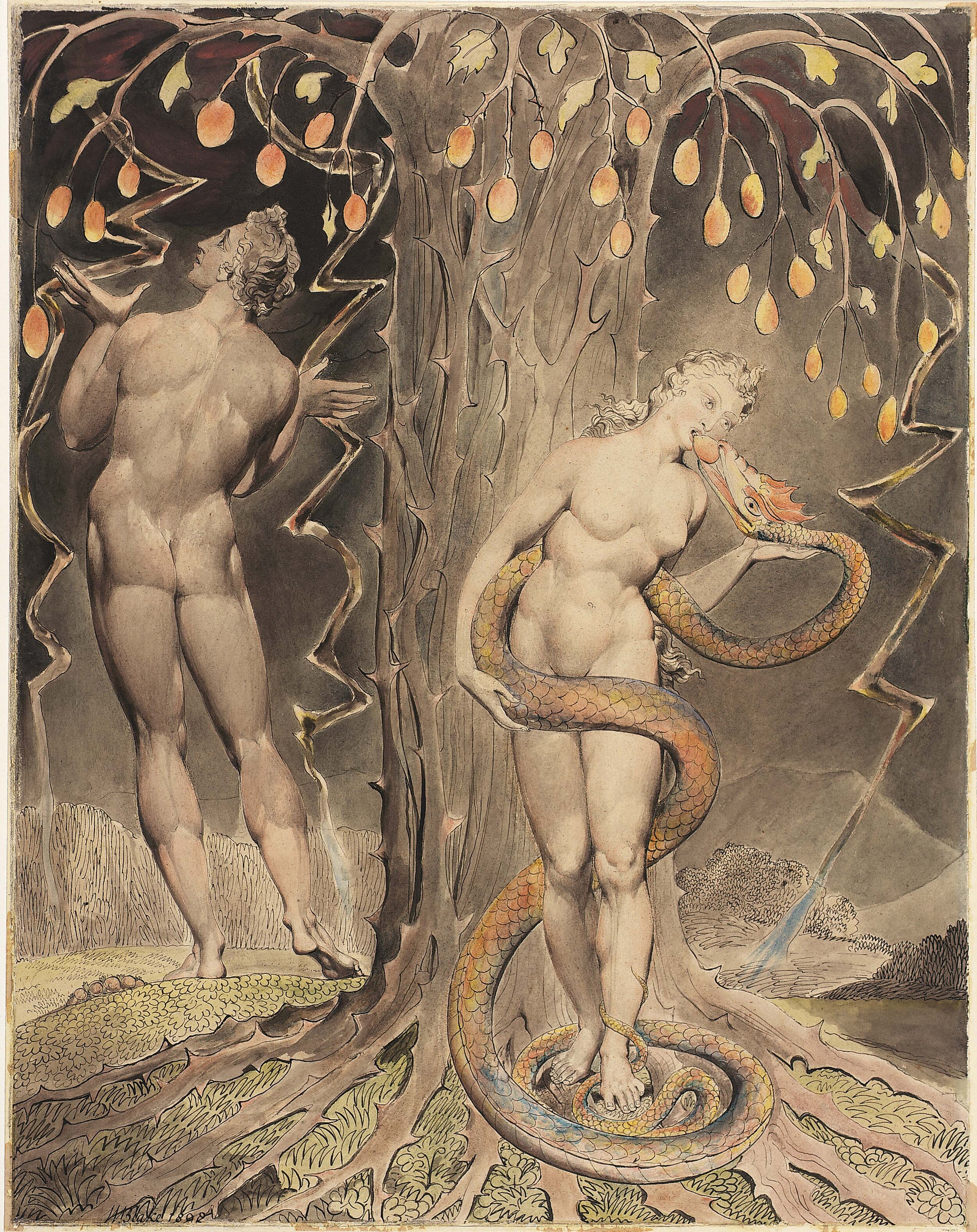
As our knowledge and trust of God the Creator grows, and as our ability to see the creation as God’s world grows, these benefits for artists may develop as well…

  • We experience more wonder and awe. These are key ingredients for a creative life and lead us to valuable artistic vision.

  • We find our life is a great gift as God has given it to us, including even the hardships. This gratitude makes us more generous in sharing our art with the world.

  • We realize our identity is found in who God has made us to be. Our identity becomes less dependent on success and the approval of others. We are more free to make the art that we feel should be made.

  • We are humbled, knowing our smallness before God. But we are honored, knowing we are known and loved.

In summary, a growing knowledge and trust of God the Creator gives us an incredible spiritual foundation for living whole-hearted lives, as men and women, but also as artists.

Creative Response

1. List 10 things God has created. List 10 more. Follow up question: What characterizes His creation? If we think of God as the ultimate artist, what is His style?

2. Read Tamisha Tyler’s poem “Who is God?” Read it at least two times slowly. Then, using the format of her poem as a template, create your own poem based on your own experience of relating to God.

Learning to Breathe (Creative Input) /  by Michael Winters

by Michael Winters

Recently, I began learning how to breathe. It seems like something I should have had down pat by age 38, I know, but somehow when I was young I started bad breathing habits. I wasn’t aware, but under heavy exercise or heavy stress it would get worse and this would lead to migraines, fatigue, and a host of other unpleasant symptoms. For the exercise-induced migraines I’d gone to a neurologist and had an MRI and blood work and the whole deal. None of the specialists thought to ask me if I knew how to breathe. 

Artist Jason Leith, the director of Saddleback Visual Arts, once told me, “You have to breathe in to breathe out.” 

Vessel no. 2 by Jason Leith

This is undebatable truth, yet I had never thought of it in the literal sense or in the metaphorical sense in which Jason intended it. We were talking about creative output and the difficulties of consistently producing good work. To consistently have good creative output, you consistently need good creative input. So what is good creative input?

It could be a book or a movie, an album or a waterfall. Good creative input is the stuff that opens you up to new ways of seeing and hearing and thinking. This certainly includes spiritual disciplines like prayer, reading scripture, and meditating, as well as meaningful conversation. Experiences of inspiration and wonder feed your soul, and your creative output is the overflow of these combined experiences. Jeff Tweedy, the lead singer of Wilco, considers it his life’s work:

“Sometimes I think it’s my job to be inspired. I work at it. That’s what I do that most resembles work. It seems to me that the only wrong thing I could do with whatever gifts I’ve been given as a musician or an artist would be to let curiosity die. So I try to keep up with other people’s creative output. I read and I listen. I’m lucky that’s what I get to do with my time—keeping myself excited about the world and not being discouraged when it loses its spark.”

As artists busy with other responsibilities, it can feel selfish to dedicate time to creative input. You might feel that your limited time needs to be used to make your art rather than consider other people’s art. It also takes money to really experience other people’s art. Aspiring musicians and actors need to go to as many live shows as possible. Aspiring visual artists need to travel to museums and galleries. This is a necessary investment. It may seem selfish, but if you suspect creating art might be an important part of who God made you to be, the dedication of time and money to your creative health is merely faithfulness. Breathing in the inspirations of other people’s work is key to breathing out your own. To get there, you might consider instituting a weekly, or at least monthly, creative discipline, like an artist date. If you can get over inhibition towards pursuing inspiration, then the journey becomes a pleasure and a joy.

I recommend you create your own system to keep track of the inspirations you find. I keep a pocket size journal on me so I can jot down anything that inspires me or makes me feel a strong emotion. You might do a daily sketchbook, or you might keep a blog. To get the inspirations working into your own output will mean taking time to not only feel inspiration, but also to take note and ask yourself why the thing inspired you. If reading Peace Like a River really got your imagination going, what was it exactly about the book that inspired you? In words or sketches, try to get to the center of the inspiration. Was it the family relationships, maybe specifically the sibling relationships? Which scene in the story stuck with you most? Usually when inspiration occurs, there’s a strong connection to your personal history. This is worth exploring and will help inform your own future work. (I’m making a note to write a future post about this.)

So, you have to breathe in to breathe out. However, the breathing lesson that really improved my health and has kept the migraines and fatigue away is the inverse truth: You also have to breathe out to breathe in. In the literal sense, this is important because if you don’t fully exhale, carbon dioxide builds up, your body tries to get more oxygen, but your lungs are already partially filled with carbon dioxide. This creates a cycle of shallow breathing, or holding your breath, leading to oxygen depletion. 

Related to creativity, it’s important to “breathe out” creative output, because that’s what creates the space for “breathing in” new inspiration. Like holding your breath, if you find yourself not getting inspired and not creating anything new, you’ll get blocked. When the rhythm of input and output gets off, it can be really hard to get back in sync. Starting by just making one small thing might help open up the space to seek out new inspiration.

Sojourn Arts Feedback Group participant Tim Robertson once shared a metaphor for culture with me. He said culture is like a lake. The lake is always evaporating and there are no streams naturally flowing into it. Artists must constantly fill the lake with new buckets of work. This is a never-ending task completed by generation after generation. This is a high and laborious calling and we need all the inspiration we can get.

Quote by Sherrie Rabinowitz. Sign: “Artists Need to Create on the Same Scale That Society Has the Capacity to Destroy” by Lauren Bon. Neon, edition of 12.

Quote by Sherrie Rabinowitz. Sign: “Artists Need to Create on the Same Scale That Society Has the Capacity to Destroy” by Lauren Bon. Neon, edition of 12.

A fulfilling and fruitful creative life is built on a healthy rhythm of input and output, breathing out and breathing in.

Questions for Reflection

Think about the relationship between your creative input and your creative output. To which do you usually give more attention? 

In the coming season, do you want to devote more time to creative input or creative output?

Creative Response

Make a list of the artists or other individuals who have inspired you most.

Further Reading: Steal Like an Artist by Austin Kleon