by Jordan Crump
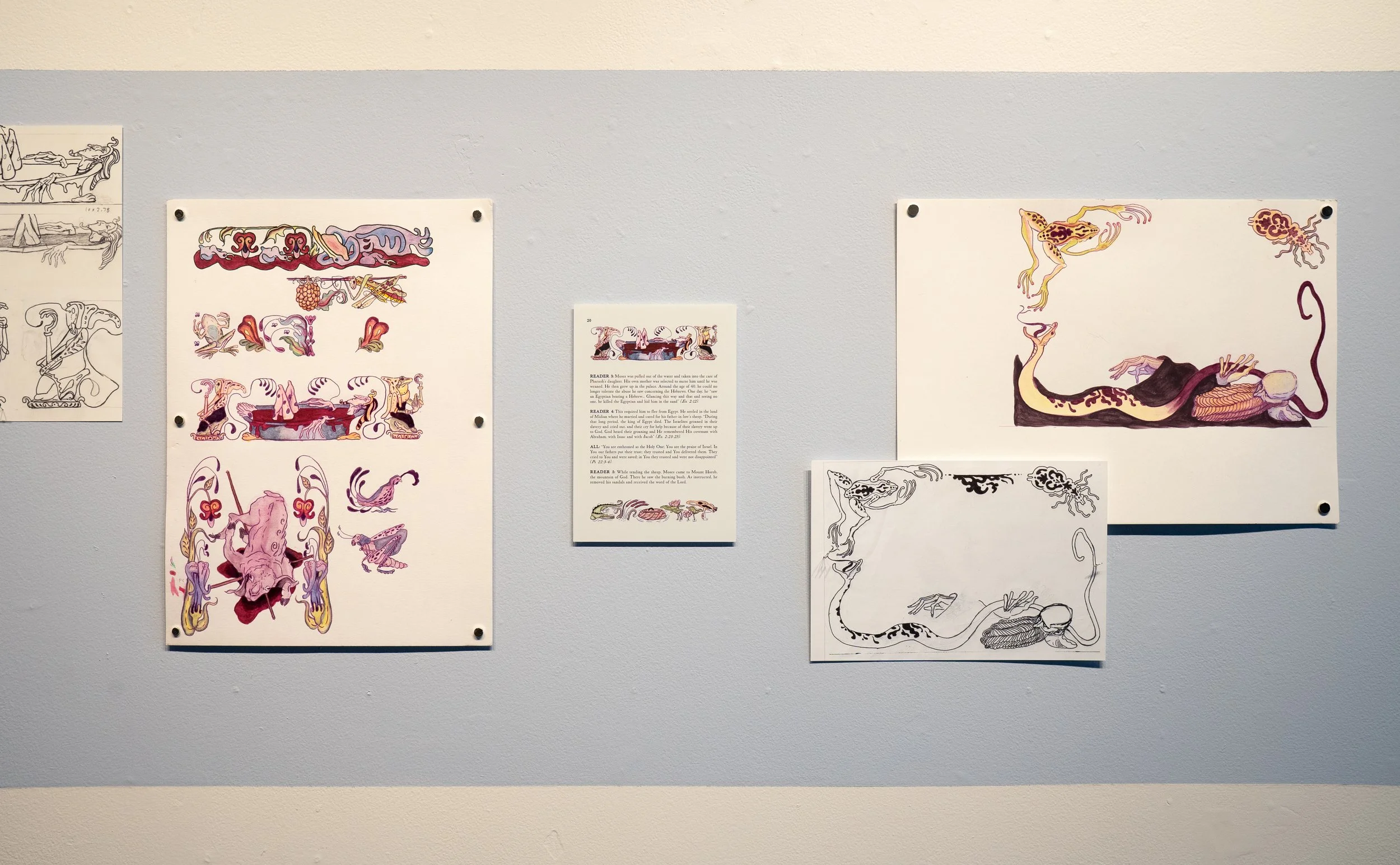
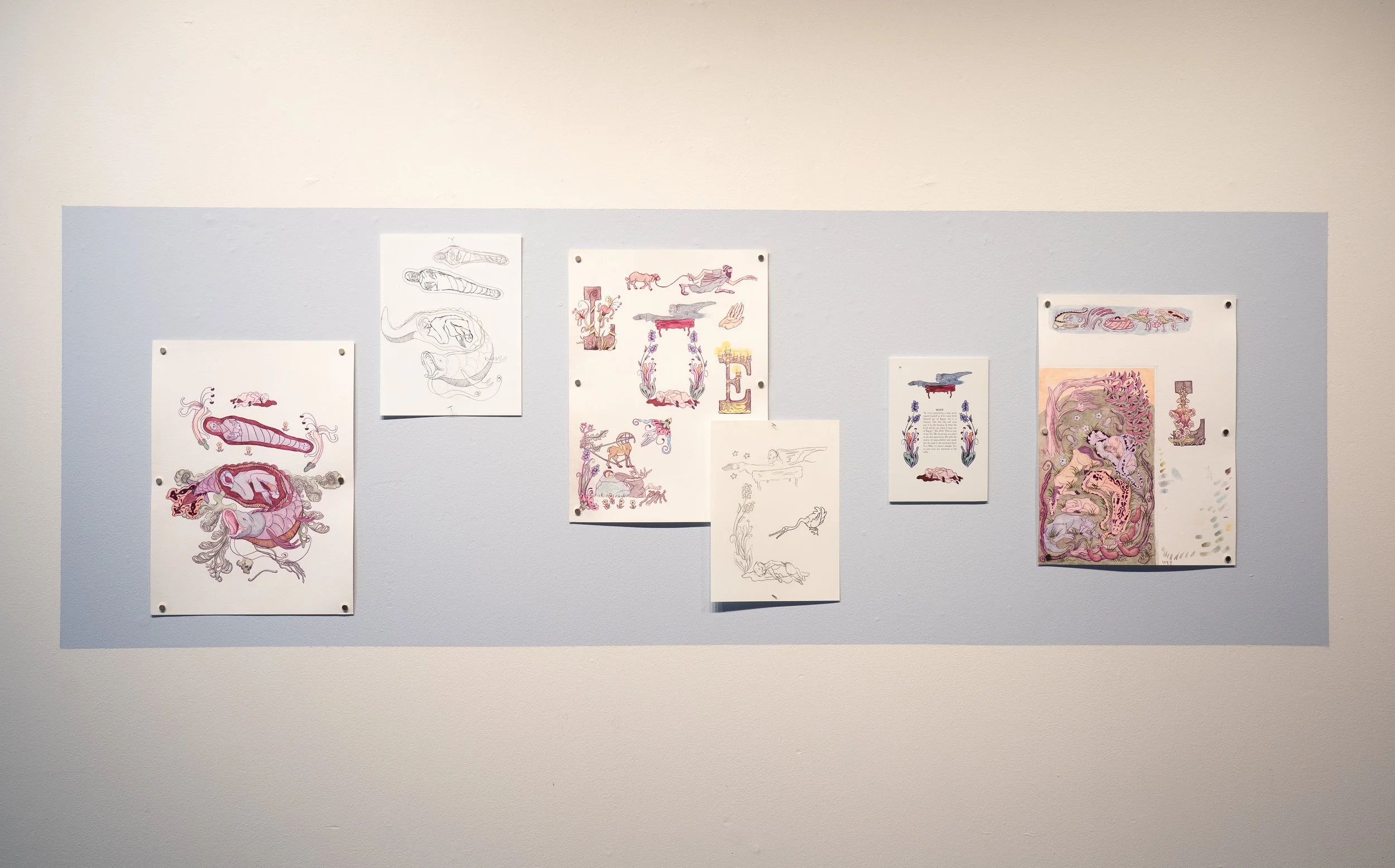
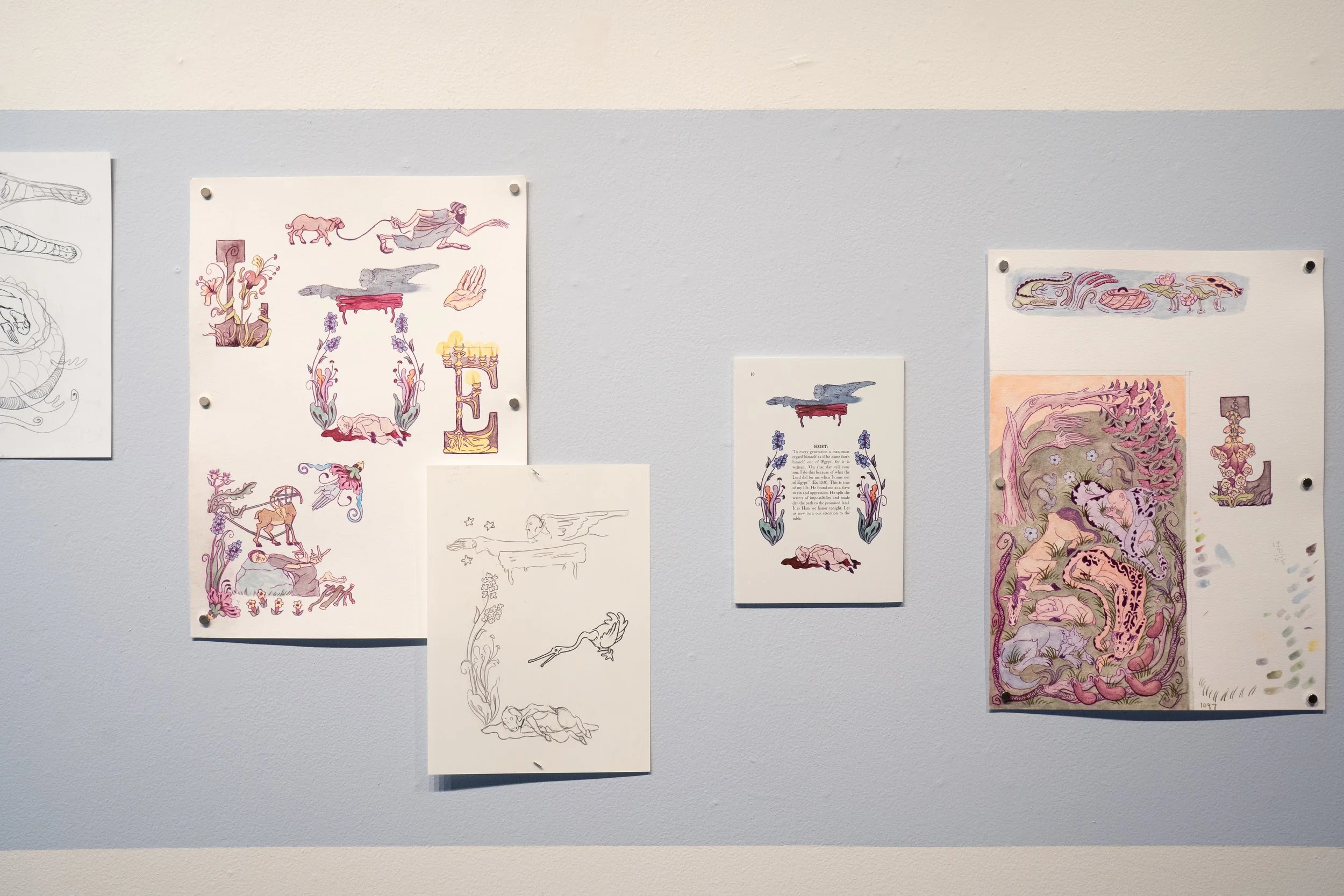
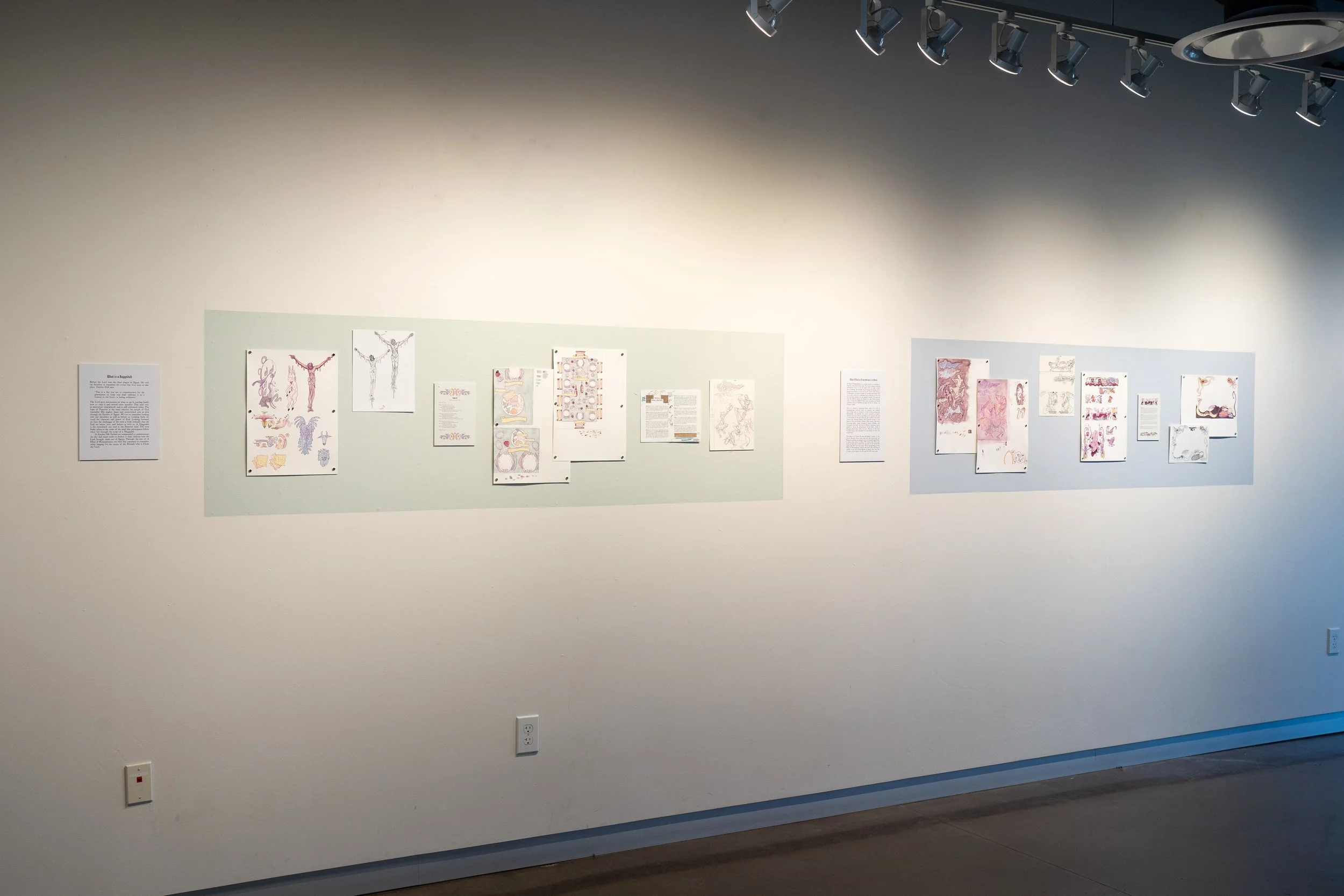
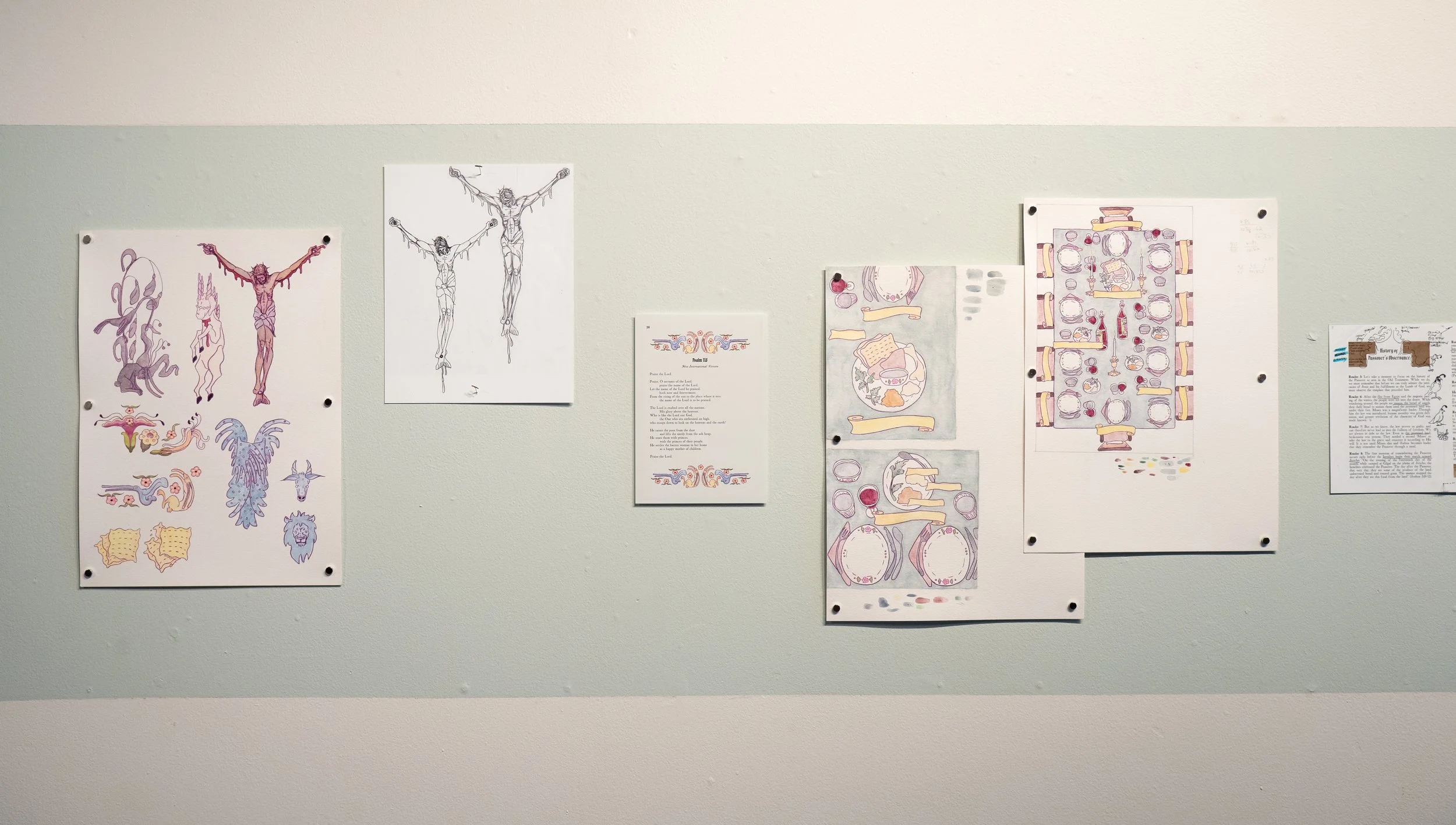
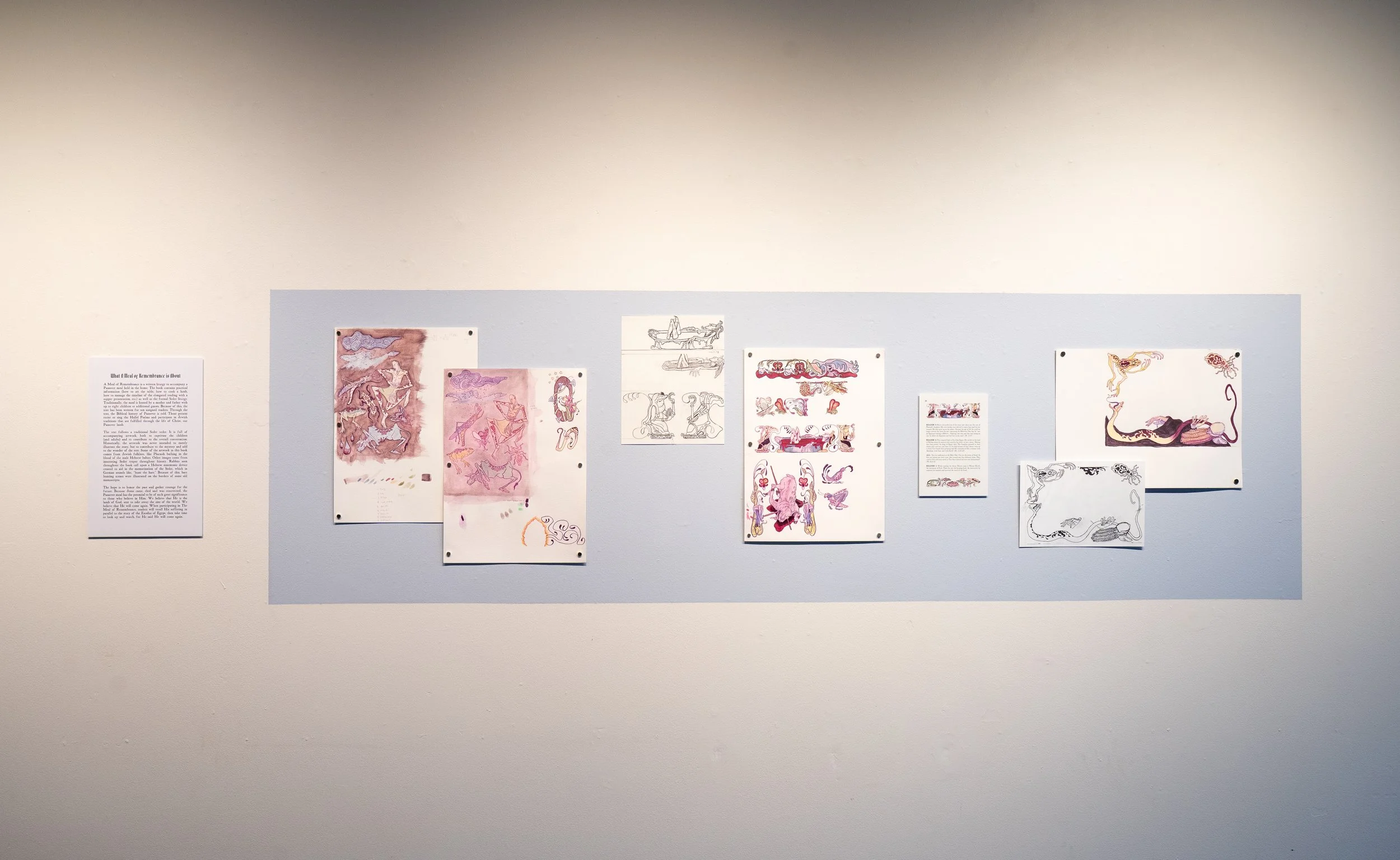
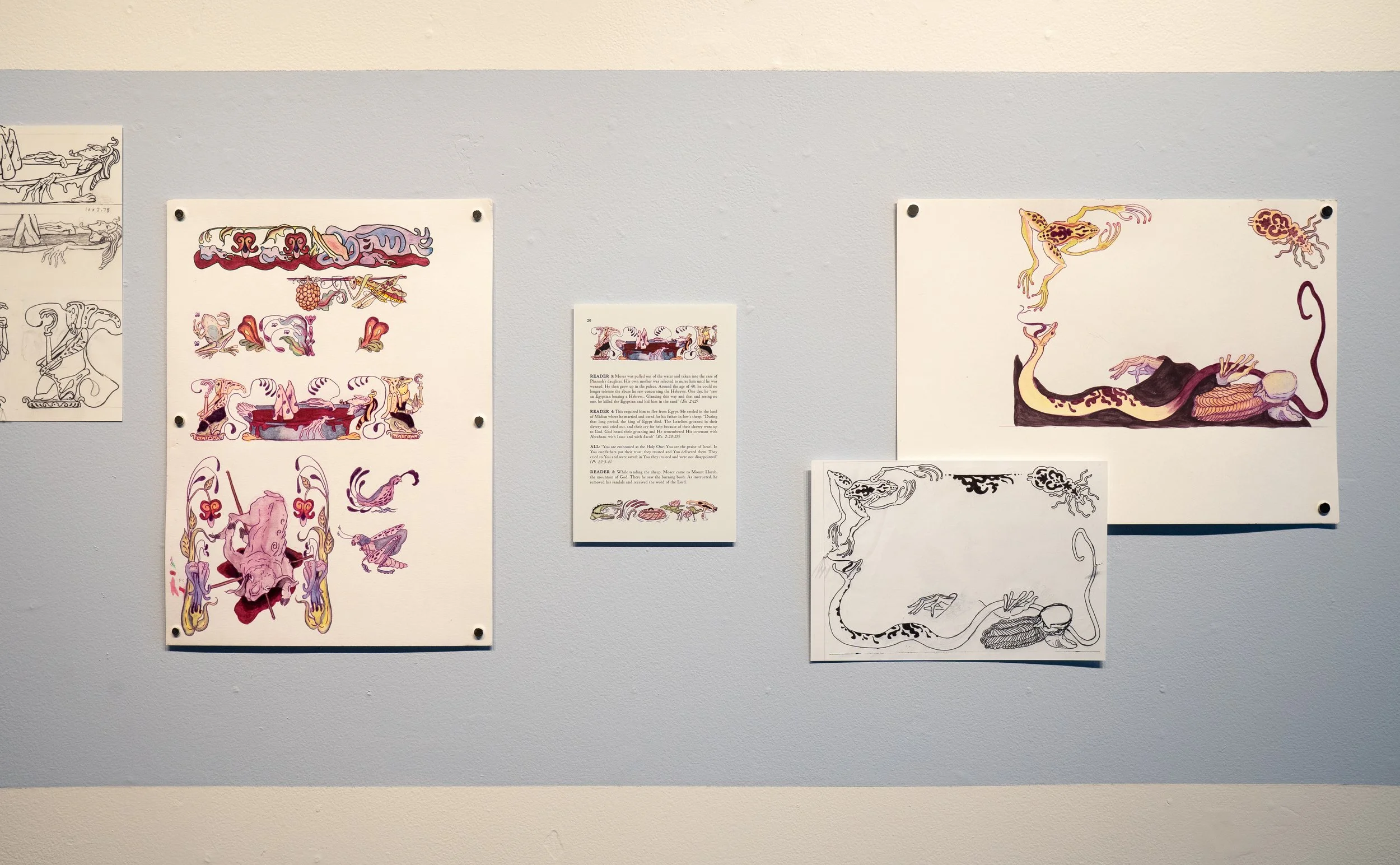
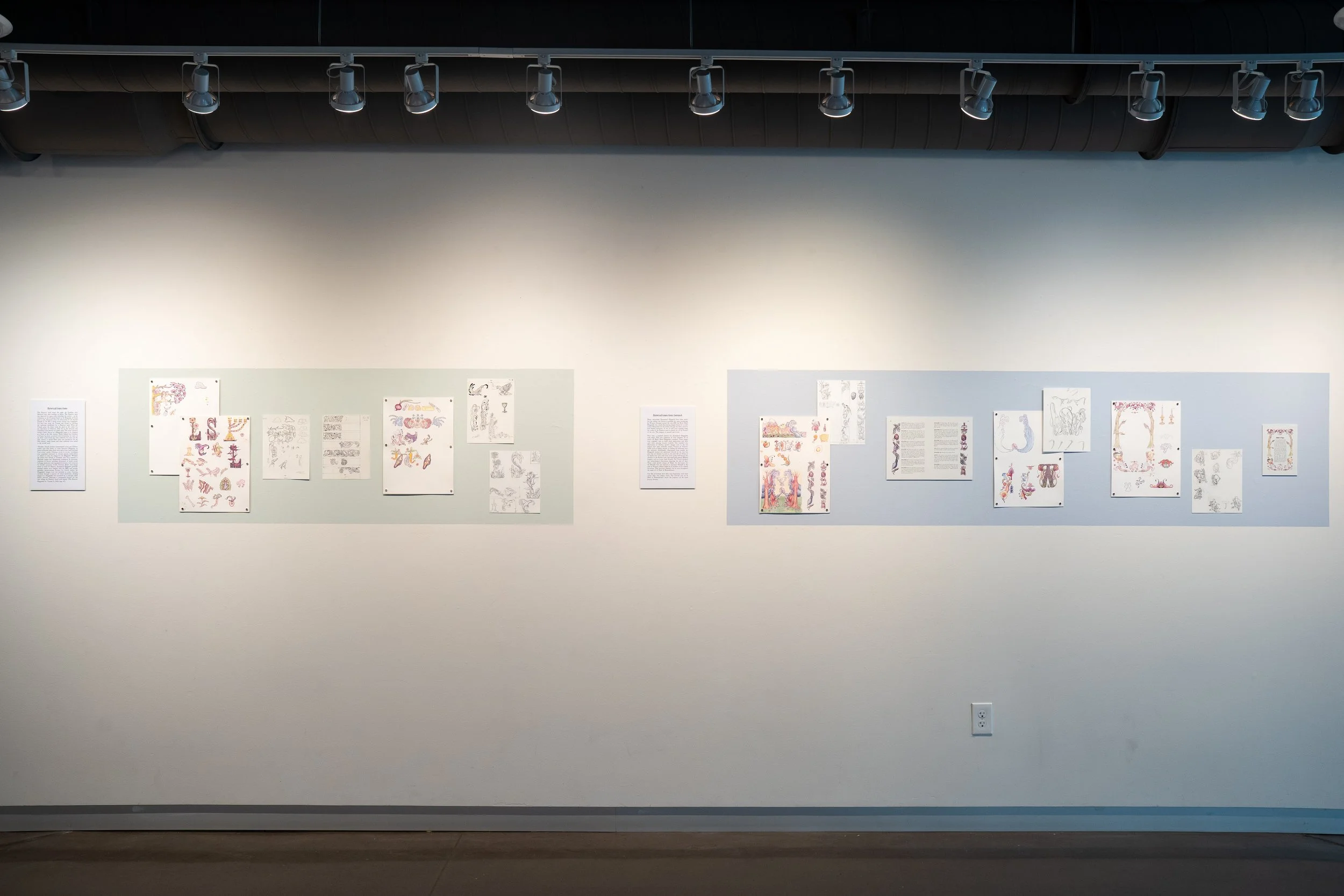
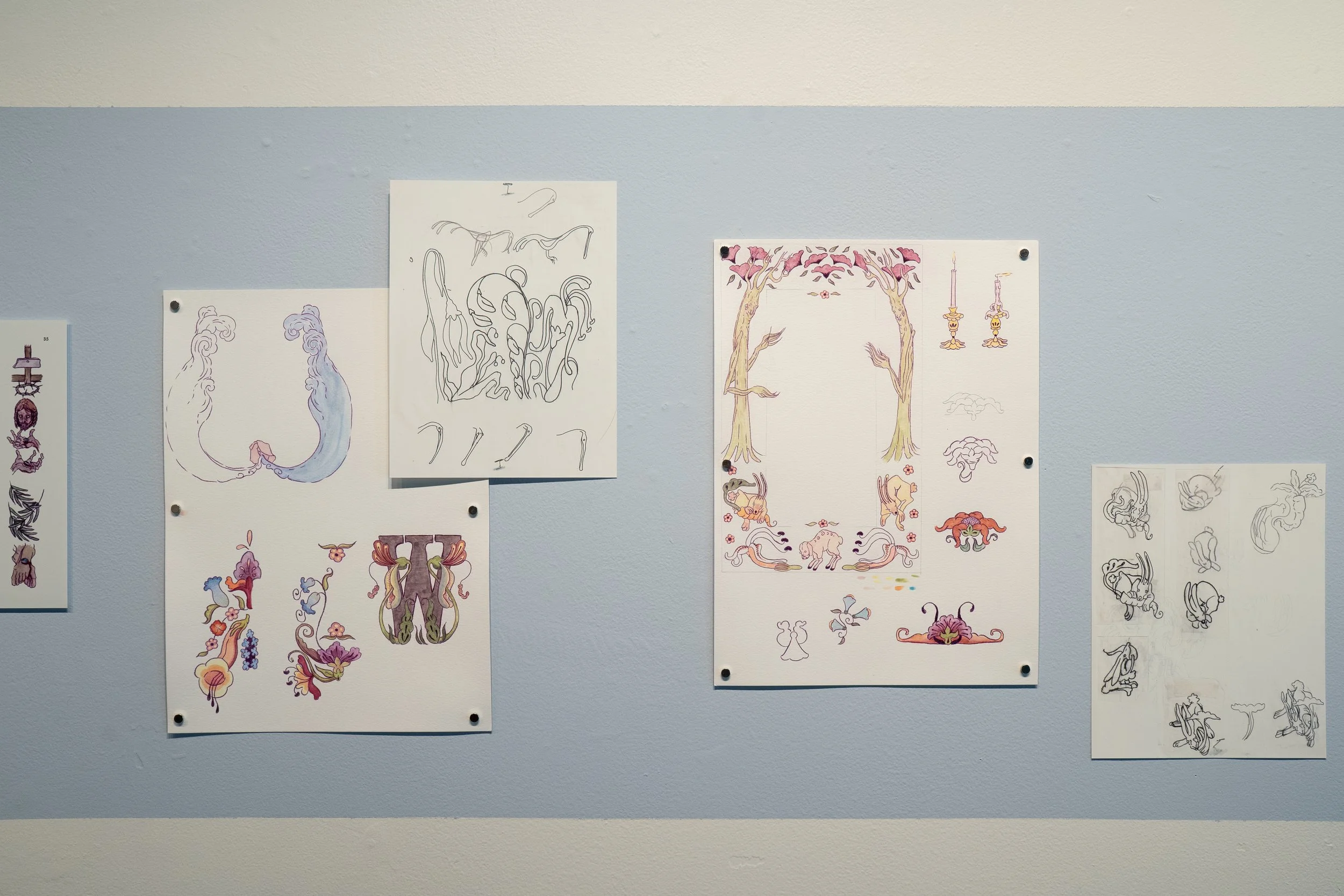
A Meal of Remembrance is on view January 18 - March 8, 2026, at Sojourn Midtown, and details the process of artist Lauren Stevens illustrating the book A Meal of Remembrance, written by Leah Roberts of Poor Bishop Hooper. Below, you’ll find photographs of the exhibit, showcasing Lauren’s initial sketches, watercolor paintings and final book spreads, along with the context and history written by Leah for the exhibit.
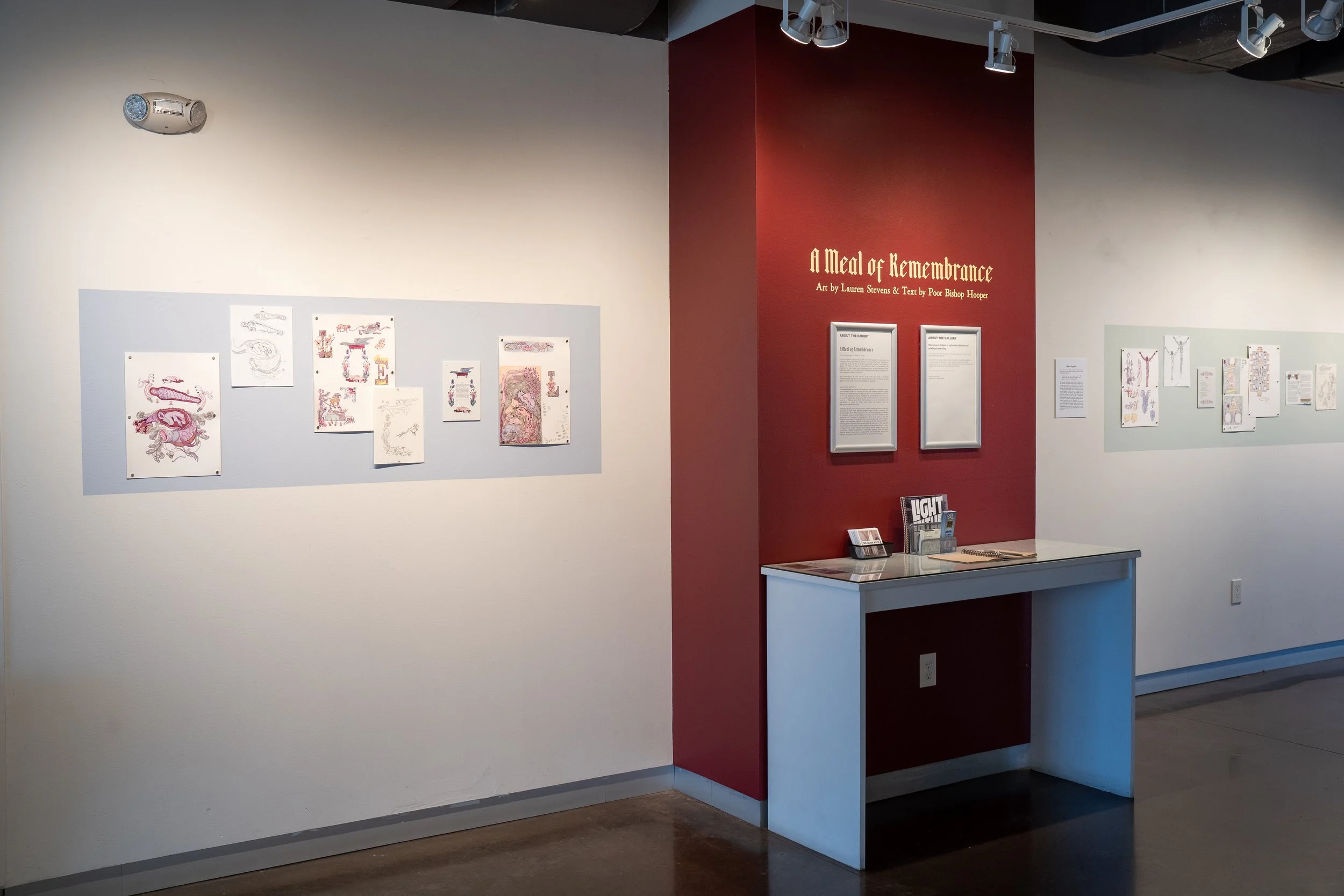
“In the book of Exodus the LORD tells the Israelites to remember the Passover for all generations. As this command has been followed by practicing Jews over the years, a liturgy, called a 'Seder,' was formed to guide the meal. A Meal of Remembrance uses the framework and tradition of the Seder, but celebrates Christ as the Passover lamb, shedding light on His fulfillment of both biblical prophecy and many of the mysterious Seder traditions.”
What is a Haggadah
“Before the Lord sent the final plague in Egypt, He told the Israelites to remember the events that were soon to take place. Exodus 12:14 says,
‘This is a day you are to commemorate; for the generations to come you shall celebrate it as a festival to the Lord—a lasting ordinance.’
The Lord gave instructions on what to eat (a yearling lamb), how to roast it and several other specifics. This meal was, as instructed, remembered, and is still celebrated today. The feast of Passover is the meal wherein the people of God remember His mighty hand and outstretched arm as seen through the Exodus of Egypt. We are to remember, looking over our shoulders as well as before us. Looking back, we recall the character and power of God. Looking forward, we face the challenges of life with a fresh reminder that the God we know, love, and believe is with us. A Haggadah is the formalized text read at the Passover meal. The term Seder refers to the order of the meal that participants follow when led through the script of a Haggadah.
In Exodus 13:8, Fathers are commanded to commemorate the day and stand ready to declare to their children how the Lord brought them out of Egypt. Through the text of A Meal of Remembrance, we obey this command to remember, while longing for the return of the Messiah who is Christ the Lord.”
What A Meal of Remembrance is About
“A Meal of Remembrance is a written liturgy to accompany a Passover meal held in the home. The book contains practical information (how to set the table, how to cook a lamb, how to manage the timeline of the elongated reading with a supper presentation, etc.) as well as the formal Seder liturgy. Traditionally, the meal is hosted by a mother and father with up to eight children or additional guests. Because of this, the text has been written for ten assigned readers. Through the text, the Biblical history of Passover is told. Those present recite or sing the Hallel Psalms and participate in Jewish traditions that are fulfilled through the life of Christ, our Passover lamb.
The text follows a traditional Seder order. It is full of accompanying artwork, both to captivate the children (and adults) and to contribute to the overall conversation. Historically, the artwork was never intended to merely illustrate the story, but to contribute to the mystery and add to the wonder of the text. Some of the artwork in this book comes from Jewish folklore, like Pharaoh bathing in the blood of the male Hebrew babies. Other images come from interesting Seder tropes throughout history. Rabbits seen throughout the book call upon a Hebrew mnemonic device created to aid in the memorization of the Seder, which in German sounds like, ‘hunt the hare.’ Because of this, hare hunting scenes were illustrated on the borders of some old manuscripts.
The hope is to honor the past and gather courage for the future. Because Jesus came, died and was resurrected, the Passover meal has the potential to be of such great significance to those who believe in Him. We believe that He is the lamb of God, sent to take away the sins of the world. We believe that He will come again. When participating in The Meal of Remembrance, readers will recall His suffering in parallel to the story of the Exodus of Egypt, then take time to look up and watch, for He said He will come again.”
Historical Connections
“The Passover meal began the night the Israelites were liberated from their bondage in Egypt. The Passover meal was observed for many years following the exodus – in the wilderness, in the Promised Land, in the Kingdom of Israel and in exile. Sometime after the destruction of the Second Temple in 70 AD, a home service liturgy was formalized. Up until that point, the Temple was crucial in fulfilling the traditions established for a Passover meal. With the Temple gone, the home took the place as the center for the observance of Passover. This led to the structure and formalized order known as a Seder meal. The script followed during a Seder, known as a Haggadah, began to be compiled as a book in the 13th century. Rabbi Samuel ben Solomon of France has been accredited with formalizing the order of the Seder meal which has been followed ever since. In the 16th century, a special Seder plate was introduced. In the 19th century, songs, poems and other additions were added to the overall meal.
‘Wealthy Jewish families commissioned artists and Hebrew scribes with fine hands to create beautiful Haggadot. In places in Europe where Jews were said to have been excluded from artists’ guilds, Christian artists in secular workshops were sometimes instructed by Jewish patrons (with advice of rabbis) to create the images for the Haggadah. Whether the artists were Jewish or Christian, they were exposed to Christian images and illuminating techniques. In particular, traditions of layout, including decorations of initial words, full-page miniatures, and marginal decorations, were resources for Jewish expression. Unlike Christian Bibles with images meant to teach the illiterate, illuminated Haggadot generally assumed readers were familiar with the Bible and popular midrashic interpretations. Further, for Jewish readers, the Haggadah’s images were not intended as icons, fostering devotion through a practice of visual meditation. Adding images to a Haggadah was motivated by a principle called hiddur mitzvah, enhancing a commanded practice (in this case, telling the Passover story) with beauty’ (The Passover Haggadah by Vanessa L. Ochs page 47).
“Many captivating illuminated Haggadot have been made, but the earliest one known is perhaps the most fascinating. In Western Germany around the year 1300, the Birds' Head Haggadah was created. Entrancing images drawn by a scribe named Menachem led the readers through the Seder meal by bird headed characters. A sort of side story running along the tracks of the Passover meal is played out of the borders of the text. The imagery is unusual and lovely.
Over time, a standard practice for illuminated Haggadah took shape. This was comprised of four elements, all of which the Birds' Head Haggadah contained. These images were originally seen in hand made manuscripts and later used when printing became available. One standard was illustrations of Exodus specific images, such as the ten plagues and other midrashic stories. Pictures of Passover rituals such as baking matzah or finding the afikomen were also included. Additionally, illustrations from outside the Haggadah (scenes not mentioned directly in the text but ones that are alluded to, such as the early life of Moses or his death) were seen, with some artists going well beyond the specifics of the Exodus story and employing general Biblical imagery, such as scenes from Genesis. The fourth standard was eschatological illustrations depicting the end of days. These could include images of Elijah, the forerunner for the Messiah who was expected to announce Himself at the time of Passover. Others might be of paradise or of a rebuilt Jerusalem. This historical standard can be seen throughout the pages of A Meal of Remembrance.
Just like all humans have their own fingerprint, each artist carries their own unique touch. The artwork seen in A Meal of Remembrance carries the fragrance of the artist Lauren Stevens.”
— Leah Roberts, Poor Bishop Hooper
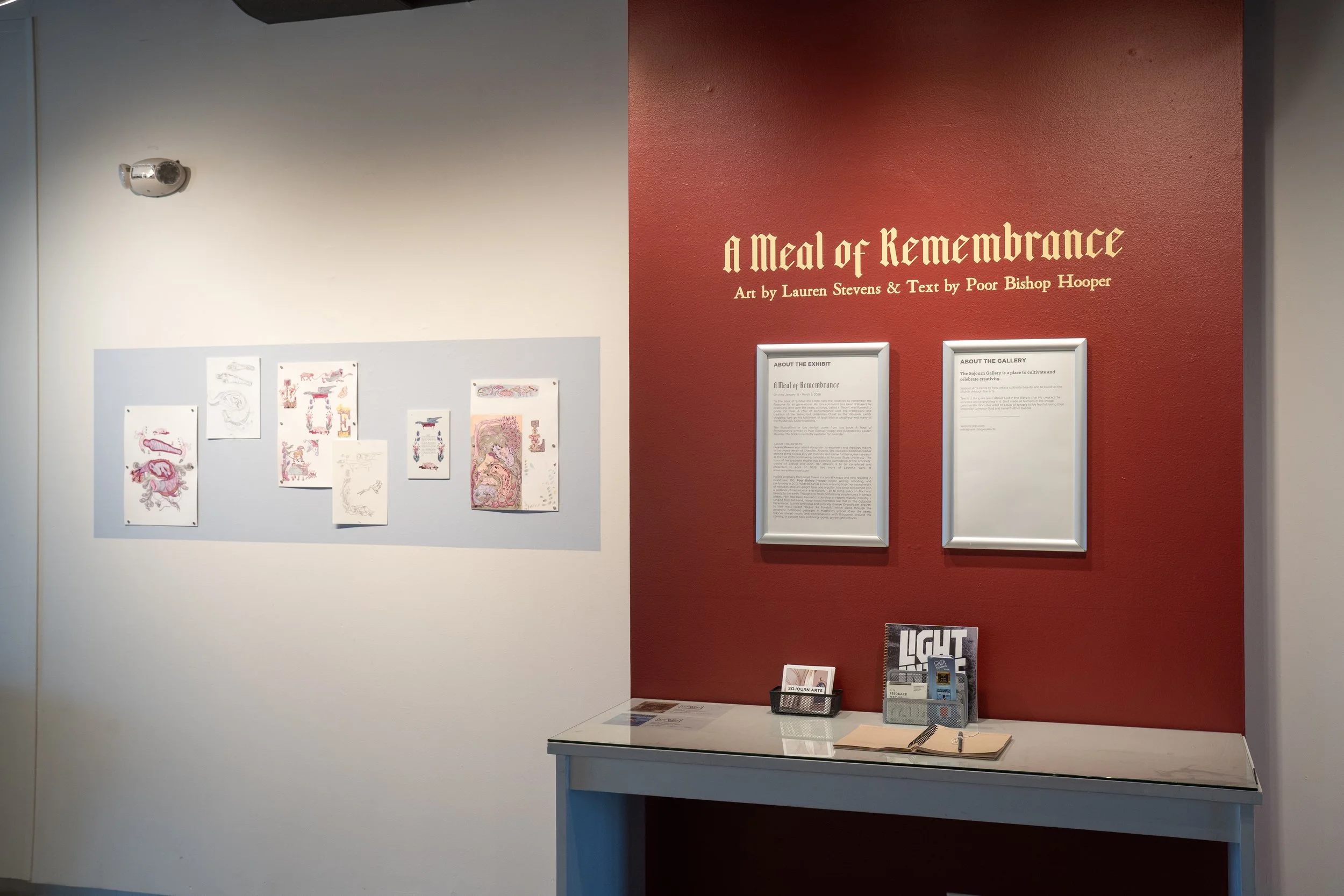
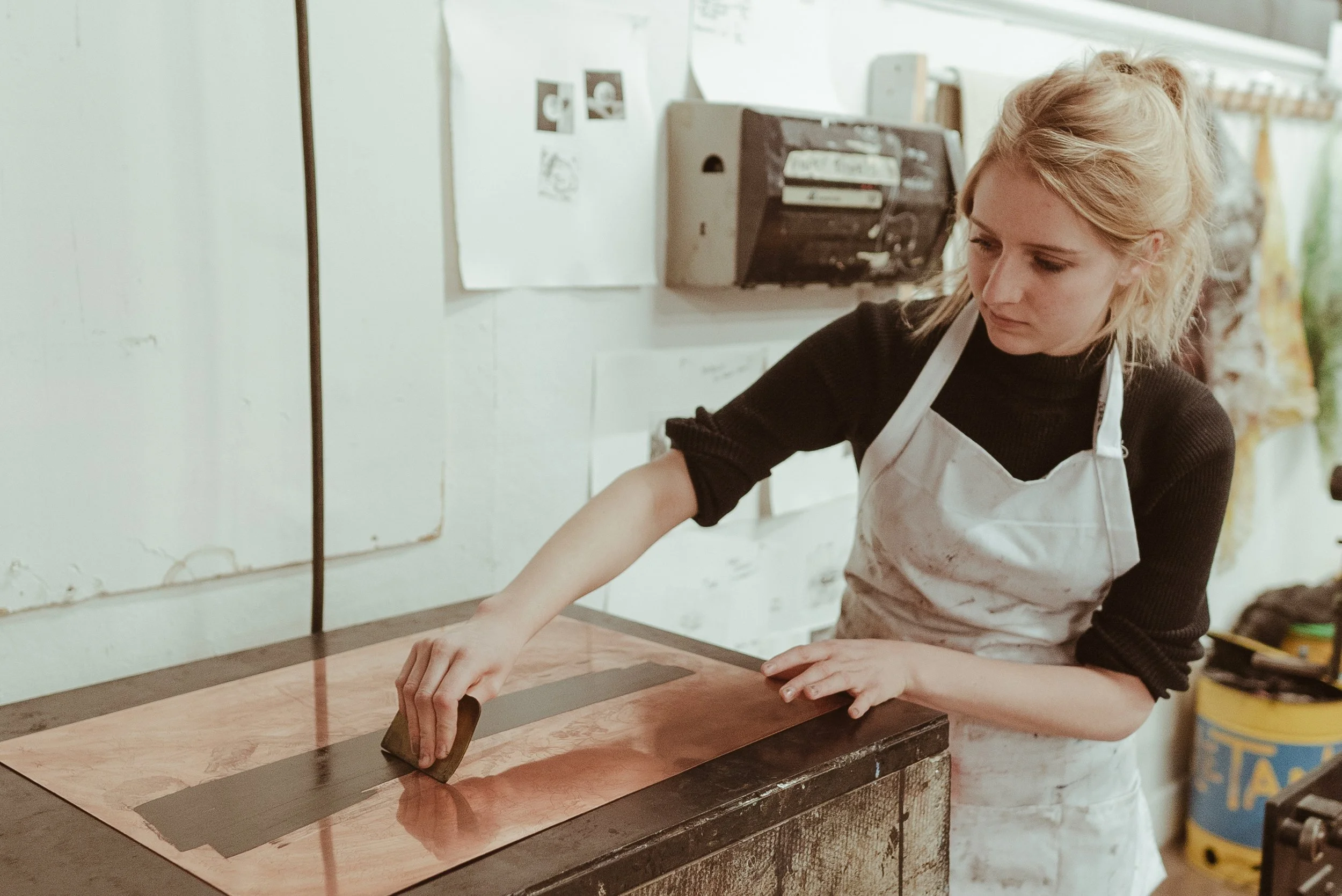
Lauren Stevens was raised alongside car engineers and theology majors in the desert terrain of Chandler, Arizona. She studied traditional copper etching at the Kansas City Art Institute and is now furthering her research as the Fall 2023 printmaking candidate at Arizona State University. The focus of her graduate studies has been the illumination of the prophetic visions of Ezekiel and John. Her artwork is to be completed and presented in April of 2026. See more of Lauren’s work at www.laurenstevensart.com.
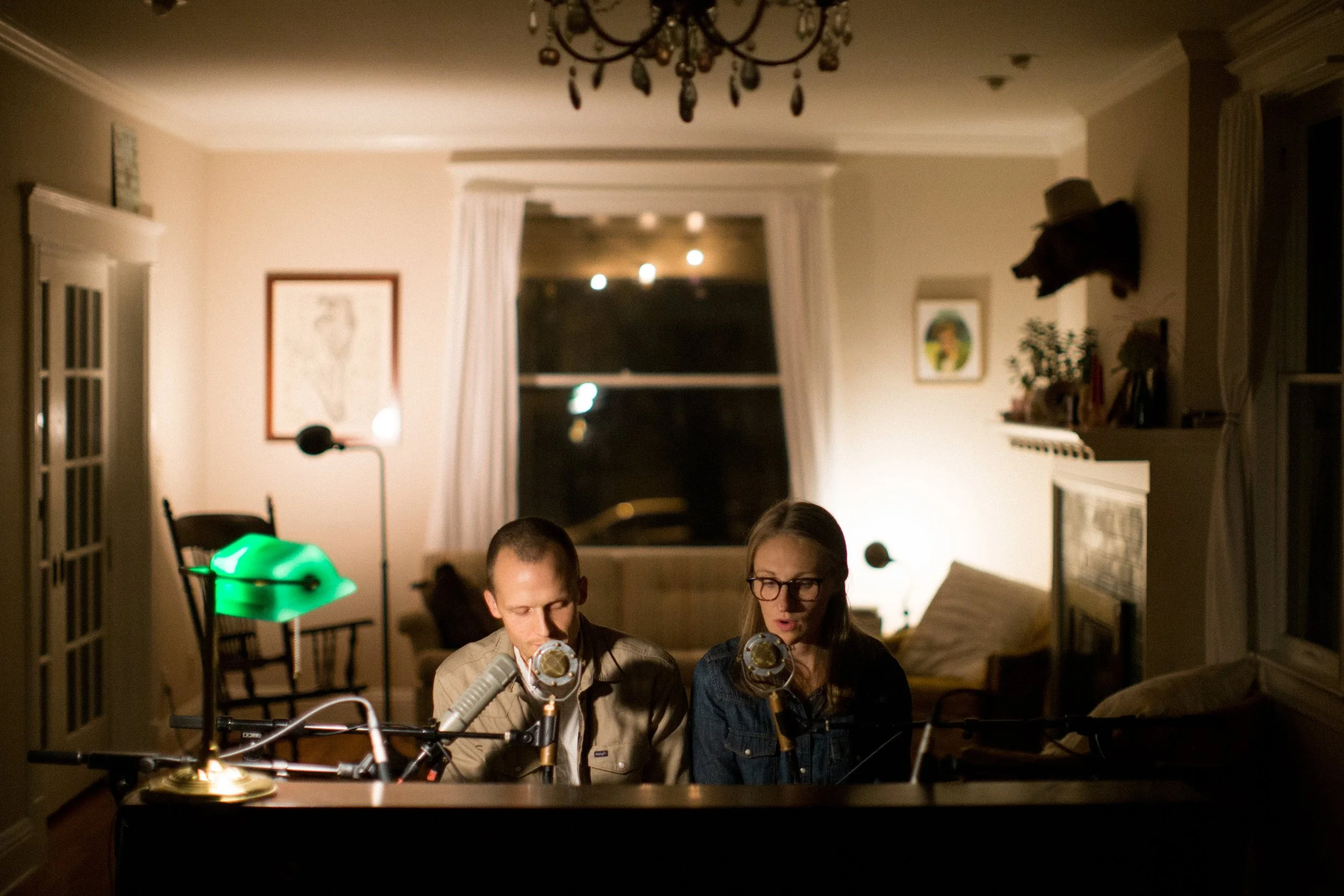
Hailing originally from small towns in central Kansas and now residing in Grandview, MO, Poor Bishop Hooper (PBH) began writing, recoding, and performing in 2013. What began as a duo, weaving together a patchwork of melodies atop an upright bass and a guitar, has since blossomed into a plethora of technicolor expressions - all to bring glory to God and beauty to the earth.
Though still often performing simple tunes in simple places, PBH has been blessed to develop a vibrant musical ministry - ranging from full band, heavy mood moments like that in ‘The Golgotha Experience,’ to their ambitious and sonically diverse ‘EveryPsalm' project, to their most recent release ‘As Foretold’ which walks through the prophetic fulfillment passages in Matthew’s gospel. Over the years, they’ve shared music and conversations with thousands around the country, in concert halls and living rooms, prisons and schools.